To Be You by Esohe Uwadiae – ★★★☆☆
Esohe Uwadiae’s To Be You is a nostalgic coming-of-age story about two Black girls growing up in Essex in the 2010s and the different ways they learn to perform, negotiate and survive their identities. Directed by Shakira Newton, this one-woman play follows Osuyi (Efé Agwele) as she prepares to leave the UK for Nigeria, packing away her belongings and revisiting the friendship that defined much of her childhood.
At the centre of these memories is Tylen, Osuyi’s mixed-race childhood best friend. Once inseparable, the pair begin to move through adolescence very differently. As Tylen reinvents herself, Osuyi struggles to find a version of herself that feels compatible with the predominantly white Essex town around her.
Osuyi is riddled with anxiety and caught in a constant performance of Blackness. She is simultaneously too Black for her surroundings and never quite secure enough in that identity to feel at home within it. Through all the humour and teenage angst, there is a clear current of inadequacy and internalised anti-Blackness. The shifting friendship between Osuyi and Tylen gives this tension its most interesting dimension, allowing the play to consider how proximity to a more palatable form of Blackness shapes who is accepted and who continues to feel out of place.
The production is most successful in its evocation of a very particular time. References to the cultural texture of the early 2010s create an immediate familiarity. For those who grew up Black and in Britain during this period, much of it is instantly recognisable. At times, however, these references feel like substitutes for fuller characterisation. The script leans heavily on familiar markers of the Black British coming-of-age experience and some of its jokes and cultural inserts begin to feel clichéd or overworked.
This is where To Be You falls short. The dialogue is often disappointing and several jokes feel stale, weakening moments that should carry greater emotional force. The play raises compelling questions about colourism, belonging, grief, racism and the versions of ourselves we construct in order to survive, but the writing does not always interrogate them with the depth they warrant.
Fortunately, Agwele is a brilliant and deeply engaging performer. She commands the room from the moment she arrives and develops an easy, playful relationship with the audience. Her ability to move between time, memories and emotional registers gives the production much of its energy. She makes Osuyi warm, frustrating, anxious and funny, holding our attention even when the script itself begins to lose it.
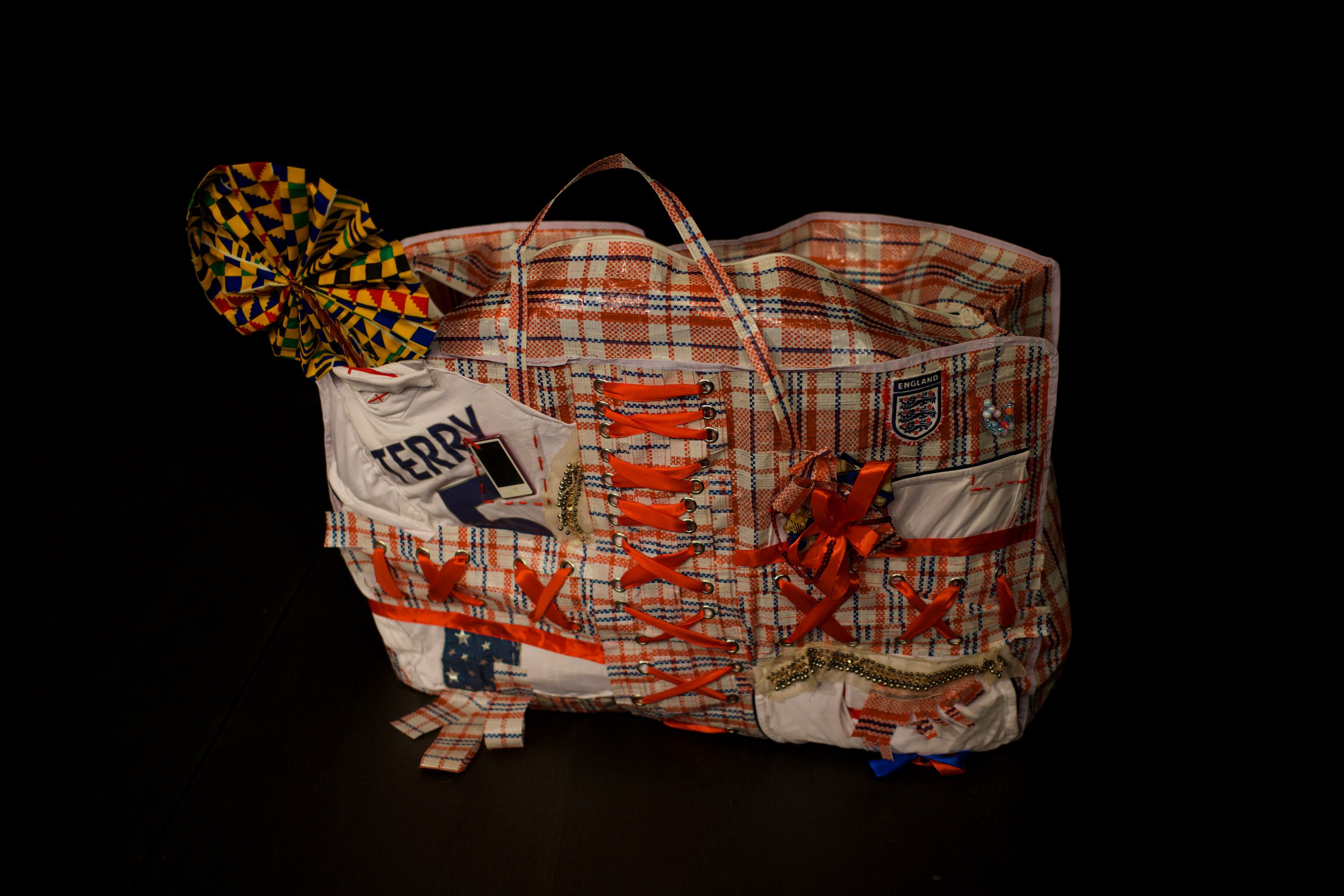
The audience engagement is particularly effective. Agwele’s responsiveness creates a sense of collective recognition, allowing the room to become part of Osuyi’s remembering. The production’s humour works best here, through the immediacy of Agwele’s delivery and the feeling that performer and audience are temporarily sharing the same cultural archive. The staging also supports her well. An open suitcase and a woven Ghana Must Go bag sit on stage, simple objects which capture the state of transition surrounding Osuyi. Everything feels temporarily displaced, waiting either to be packed away or carried forward.
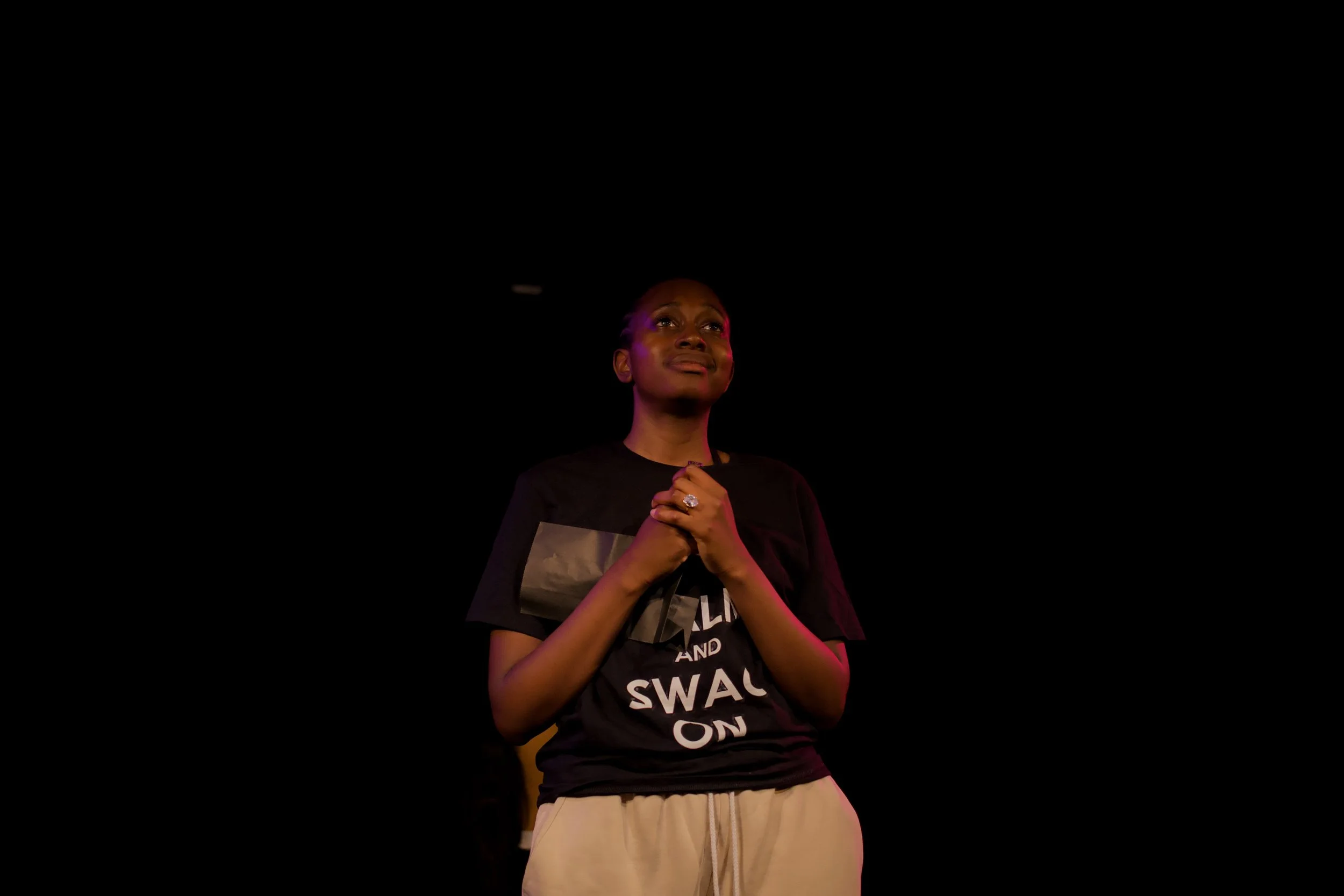
The lighting is used cleverly to distinguish between periods in Osuyi’s life, guiding us through the play’s flashbacks and shifts in time, place and memory. In a production built around a single performer moving between several versions of herself and the people around her, these technical choices provide much-needed clarity and momentum.
Ultimately, To Be You is saved by the strength of its central performance and the emotional familiarity of the world it depicts. Its exploration of friendship, survival and change gives the play a warm and satisfying conclusion, even if the route towards it is uneven.
To Be You captures an experience of Black British girlhood still rarely seen on stage: one lived outside inner-city London, shaped by isolation and otherness, but also by the friendships and cultural touchstones through which a sense of self emerges. Agwele brings that world to life with charisma, humour and an assured command of the room, making Osuyi’s search for belonging feel both specific and deeply recognisable to those who share in this lived experience.
★★★☆☆
By Koehun Aziz-Kamara
To Be You is showing at The Glitch until 24 August