The Story by Tracey Scott Wilson – ★★★☆☆
“You have power over your mind - not outside events” - Marcus Aurelius
But do we really have power over our minds? Increasingly over time, we have become subject to more influences than ever before in human history. Social media algorithms have shifted from learning our behaviours to predicting, even dictating them. What we see in the media has a significant impact on the way we think and feel, and this is power. Journalists have understood this for a long time. The role of a journalist at a basic level is to deliver the truth, or at least a version of it and in doing so they control the narrative; they hold a certain power. In The Story, an unsettling, fast-paced newsroom thriller penned by Tracey Scott Wilson, we discover that whoever has control of the narrative, wields the most power over everything, even if that power corrupts them in process.
Written in 2003, The Story sends a message that rings true and loud in 2026. The story in question starts with the murder of a white male teacher in a Black neighbourhood, the only eye witness being his wife whose testimony feels fragile for more reasons than the subtle racism she displays. The play doesn’t shy away from telling us that this is a story about race; it is explicit, and intrinsic for the mere fact that racial politics are a strand of America’s DNA and this becomes apparent in The Story almost immediately.
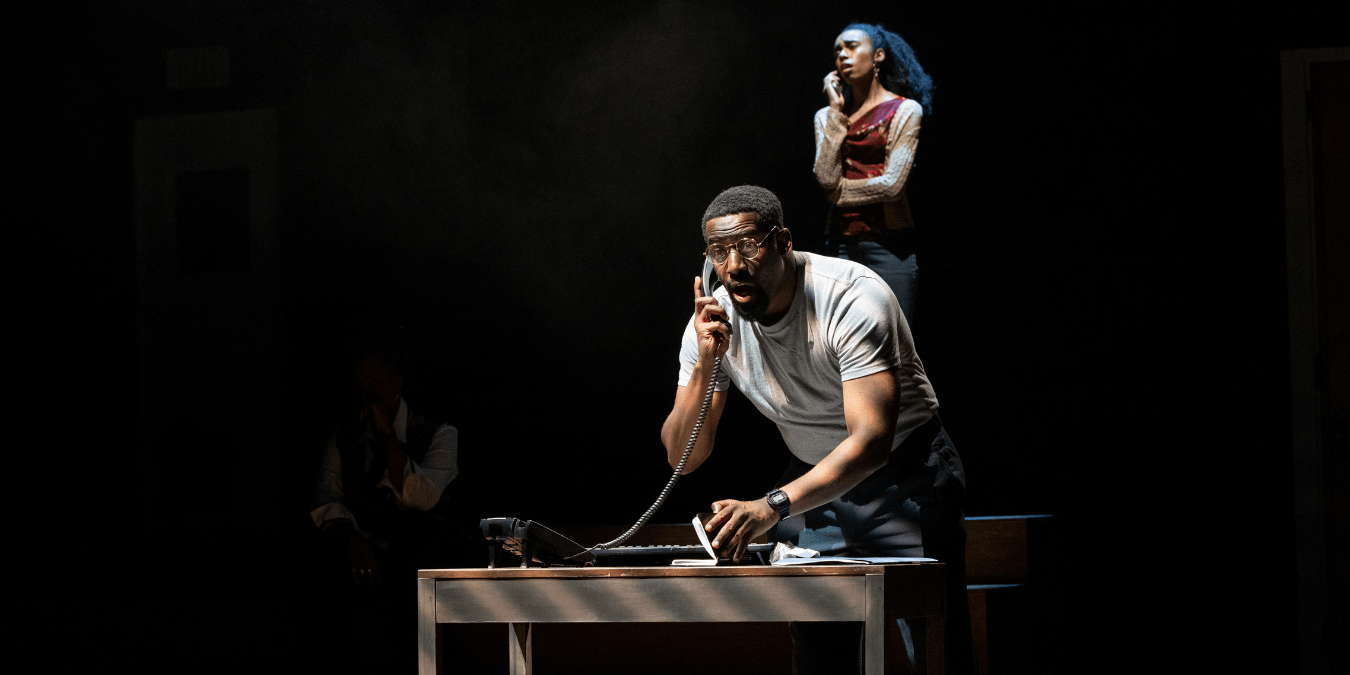
We meet Yvonne (Letitia Wright), a budding journalist in a clandestine relationship with Jeff (Wilf Scolding), a direct descendant of the newspaper Yvonne is working at, and the disgraced former editor of the section Yvonne has been assigned to. Yvonne will be working under Pat (Lorraine Toussaint), a veteran at the newspaper, who had spent her career fighting arduously for the advancement of black journalists, and alongside Neil (Ashley Thomas), an ambitious and intelligent young journalist with a distaste for Yvonne and other women he coins “uncertain sisters”. The tension between Yvonne and Pat makes for an interesting discussion about black women existing on different ends of different spectrums in the corporate world. Yvonne is young, selfish and determined to establish herself as a journalist, with no regard for who came before, or who will come after, while Pat is, far more experienced, aligned with a greater cause but equally headstrong. Wilson’s script does well to draw out their differences and similarities as they go head to head, and ultimately share the same fate.
Clint Dyer’s direction is simply electric. The first act of the play sees scenes cut like newspaper clippings, conversations switch between characters, place and time marked by blinking lights. It creates an effect that mirrors the shaping of a print newspaper, with quotes and images pieced together to create a version of truth, or pieces of different stories that come together on the page to create a bigger picture. The second half, these scenes are replaced conversations that take place in real time, placing us in the brunt of the action itself. The entire narrative of the play is fragmented, divided into segments, a mosaic of the truth and a complete telling of the characters’ individual stories. Dyer’s direction feels innovative, sharp and imaginative, making you sit forward in your seat. It works well with most of the show, but does at some points feel like it is jars against what is a complicated plot.
As The Story develops, amidst various debates about racism and poverty in America, women in the workplace, stereotypes, violence and relentless pursuit for success in the journalism industry, we do lose sight of the story at hand. Neil and Yvonne chase different leads aiming to solve the mystery and break the story in a Pulitzer worthy article, and in the process a fragile web of lies and deceit comes undone. The result feels underwhelming in that nothing feels resolved, and The Story builds up a crescendo that falls quite flat.
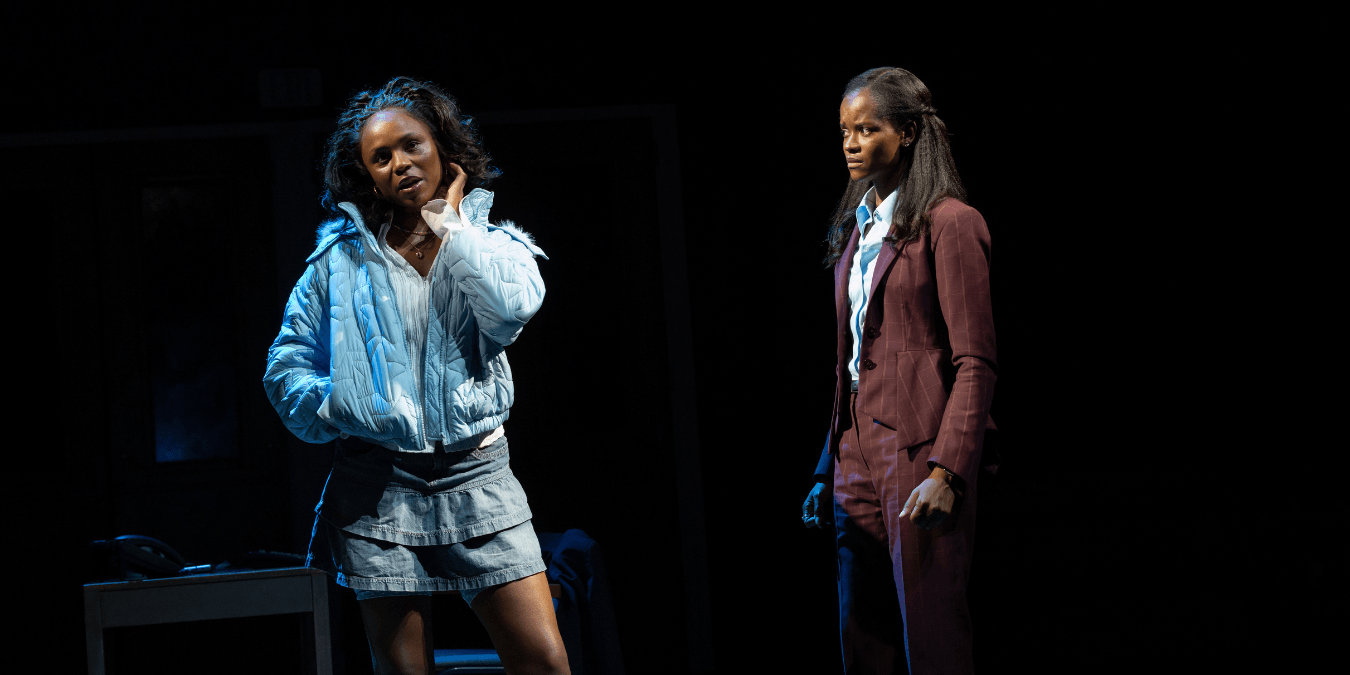
The Story features a strong cast, with an ensemble that works the stage with ease. Along with the main cast, they create an underworld where power and control belongs to whoever can work the narrative. Thomas’ performance as Neil is a true standout. The character’s loyalties go beyond his personal relationships and instead lie with principle, legacy and commitment to journalistic standards, an allegiance to furthering the betterment of black people, and Thomas depicts his constant struggle excellently. Aliyah Odoffin as Latisha, is also superb, as she manages to create a character who serves as a symbol of Yvonne’s inner turmoil, an alter-ego fashioned from her tortured mind.
Anna Fleischle’s set design is nothing short of impeccable, the constant moving parts and multi-use of prop to demonstrate just how easy it is to mould what lives around you into a world of your own making feels like the hero of the show. Combined with video design from Gino Ricardo Green and Tal Yarden, lighting from Paul Anderson and sound design from Benjamin Grant, The Story is a visual and audio spectacle in the genius way the National Theatre does so well.
Overall, The Story is provocative, but it feels like it provokes to no real end or conclusion. Conversations and dialogue about injustice and discrimination towards women, black people and black women race are thrown at the audience, piled in quick succession without properly addressing them. Wilson’s decision to leave many of the play’s loose ends untried creates an overwhelming feeling of dissatisfaction rather than mystery. The play’s final scene, a riot that ensues following a major act of injustice that tears the city apart, which felt out of place, again potentially meaning to provoke and create a powerful final image but instead ended the show on an uncomfortable note. Relevant, memorable and bound to start conversation but confusing and overwhelming at times.
★★★☆☆
By Melody Adebisi
The Story is showing at National Theatre until 24 October