Jaja’s African Hair Braiding by Jocelyn Bioh – ★★★★☆
There are spaces we inhabit that serve as conduits of culture that we often take for granted. Third spaces that are functional, but also safe havens, places where we can experience joy, sorrow, and community. As a black woman, hair salons are one of these spaces, and Jaja's African Hair Braiding is no exception.
Jocelyn Bioh's pen graces the Lyric Hammersmith stage once again, with Monique Tuoko's direction to give us a show filled with energy and vibrancy from start to finish, set deep in the jungle of Harlem. Jaja's African Hair Braiding is a snapshot into the life of working African women navigating the intersectionality of being black, female, and immigrants in the US. These women are sensitive, unapologetic, resilient and dramatic, and fundamentally human, and it is their humanity that resonates.
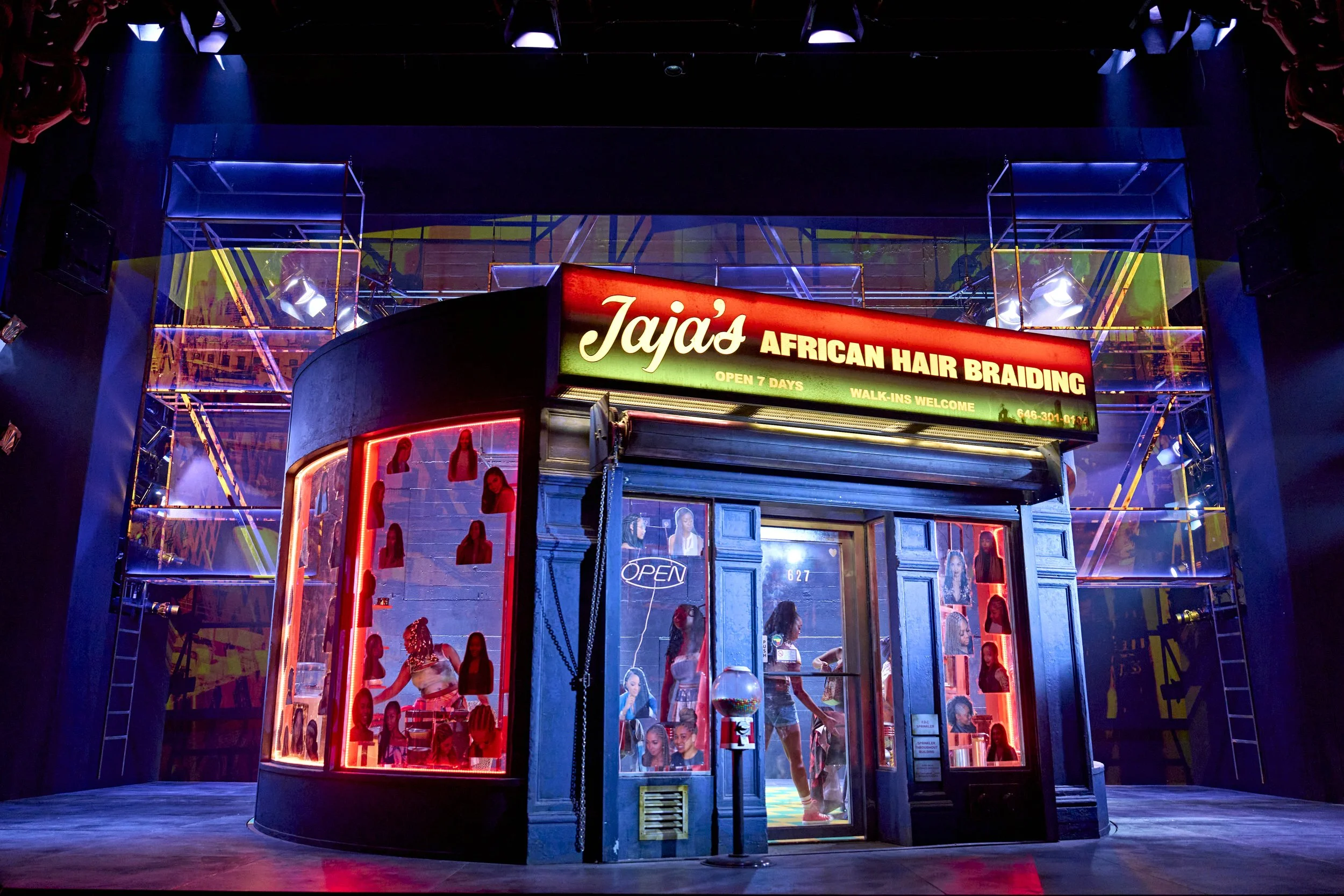
The set for Jaja’s African Braiding Hair feels like a character in and of itself. The play starts with Jaja’s shutters down, age-old graffiti adorning the front of the shop. The Lyric’s revolving stage reveals the interior of the salon, Tardis style, placing us in the centre of the action. The traditions of black hair salons appear to be prevalent across the diaspora worldwide, as the decor inside this hair braiding shop in Harlem feels like a mirror of my local one in East London. A television bouncing between music videos and Nollywood films hangs in the corner of the salon, and between scene changes they are projected onto the scaffolding that looms over the shop. Customers, vendors and occasional lovers burst in and out of the door, and the effect of it all is close to hyperrealism. Set designer Paul Wills’ work is immaculate, and truly elevates the quality of the show.
The play starts on a summer day where heat in this spot in Harlem has proven too much for the air conditioner to bear, and the women work in the sweltering heat of the sun and the brewing tensions between themselves, and even some of the customers. Bioh’s play takes place over the course of a day in the lives of the braiders of Jaja’s African Hair Braiding salon. Through relationship woes, struggles with immigration, and the complications of identity, the braiders work non-stop, and we are privy to the complexities of their lives. Touko’s direction is exciting and invites you into their world, one that feels real enough for you to relate to but lively enough for you to stay fully engaged throughout.
The women of Jaja’s come from different parts of West Africa, and bring with them different personalities. Jadesola Odunjo is Sierra Leonean Miriam, seemingly shy and sweet but not to be played with. Also from Sierra Leone is Jaja (Zainbab Jah) the store’s owner and her daughter Marie (Sewa Zamba), college-bound but also an aspiring novelist, who are polar opposites/ Jaja is theatrical and lives with her head above the scaffolds of her shop where her dreams live, whereas Marie is more subdued, realistic more than pessimistic and level-headed in a crisis. babirye bukilwa is Aminata; boisterous and bold, confident to a fault but still victim to the sweet and senseless nothings of the African man she is in love with. You have Ndidi (Bola Akeju), whose Nigerianess enters the room before she speaks a word, who is at constant loggerheads with Bea (Dolapo Oni), hailing from Ghana, who is stubbornly principled and inflexible, but well-meaning with a loyal heart. Together these women work as hair stylists but also therapists, relationship councilors, shoulders to cry on, a punching bag to let out pent up frustration, griots, storytellers.
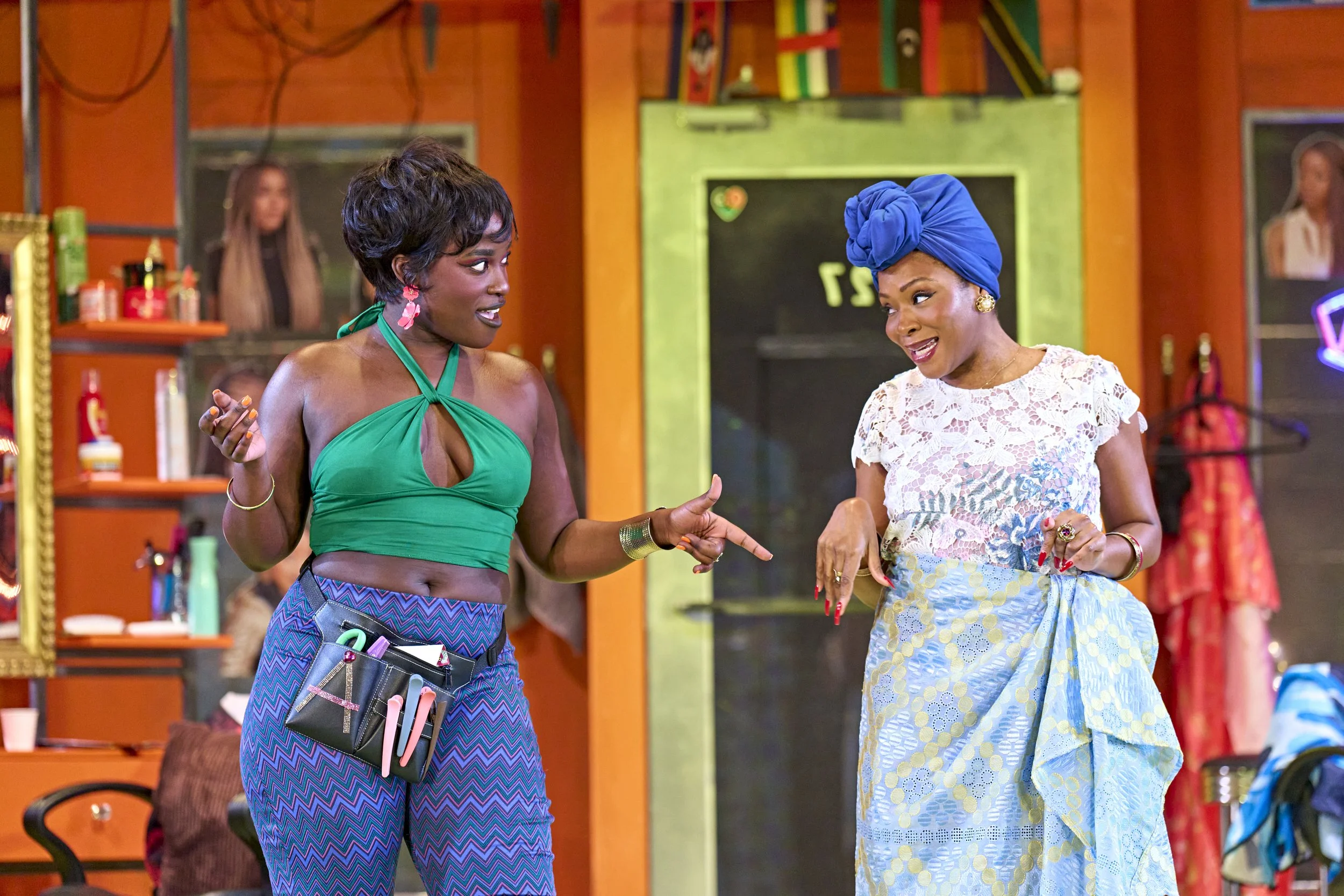
Bioh’s depiction of an African hair salon in Harlem feels similar to what was achieved by Inua Ellams highly acclaimed Barbeshop Chronicles. In both plays, the act of getting your hair done is more than just a grooming experience, and the exchanges that happen in these spaces delve into much more than what appears on the surface level. There is a shared understanding in the looks the braiders give each other when a difficult client comes in, exchanged in a glance that you’ll miss if you’re not paying close enough attention. Renee Bailey, Demmy Ladipo and Dani Mosely bring texture and riotous laughter as the revolving customers that frequent Jaja’s. All three are able to embody archetypes that are immediately familiar to us, and still feel like they deliver sharp performances.
As enjoyable as Jaja’s African Braiding Hair is, the play lacked some depth. Partly attributed to its short length, there were characters and storylines that could have been developed further making for a show that is not just funny with some serious moments, but a full exploration of the hearts and lives of African female immigrants in the diaspora. The play also ended quite abruptly on a cliffhanger, adding to a feeling of incompleteness. It still hits emotional beats, and touches on important issues that often go neglected by society at large, so it is still a well-rounded watch.
Jaja’s African Hair Braiding feels timely, despite being set in 2019. Bioh’s play is joyous and inviting, and reminds us that community has the power to withstand the cruelty of a world set up against you. Through everything, the characters manage to constantly embrace one another, and it is a heart-warming reminder. Hilarious throughout, the vibe in Jaja’s is one that lingers slightly after you leave the Lyric Hammersmith, and is sure to lift your spirits.
Jaja’s African Hair Braiding is showing at Lyric Hammersmith until 25 April.
★★★★☆
By Melody Adebisi