Marie & Rosetta by George Brant – ★★★☆☆
Music has long been a symbol of hope, freedom and identity for Black communities. Rooted in expressions of joy, it has also served as a vital anchor for survival and continuity. From Blues and Gospel to Jazz and Rock and Roll, the African American experience has been shaped profoundly by the power of sound. This legacy sits at the heart of Marie & Rosetta.
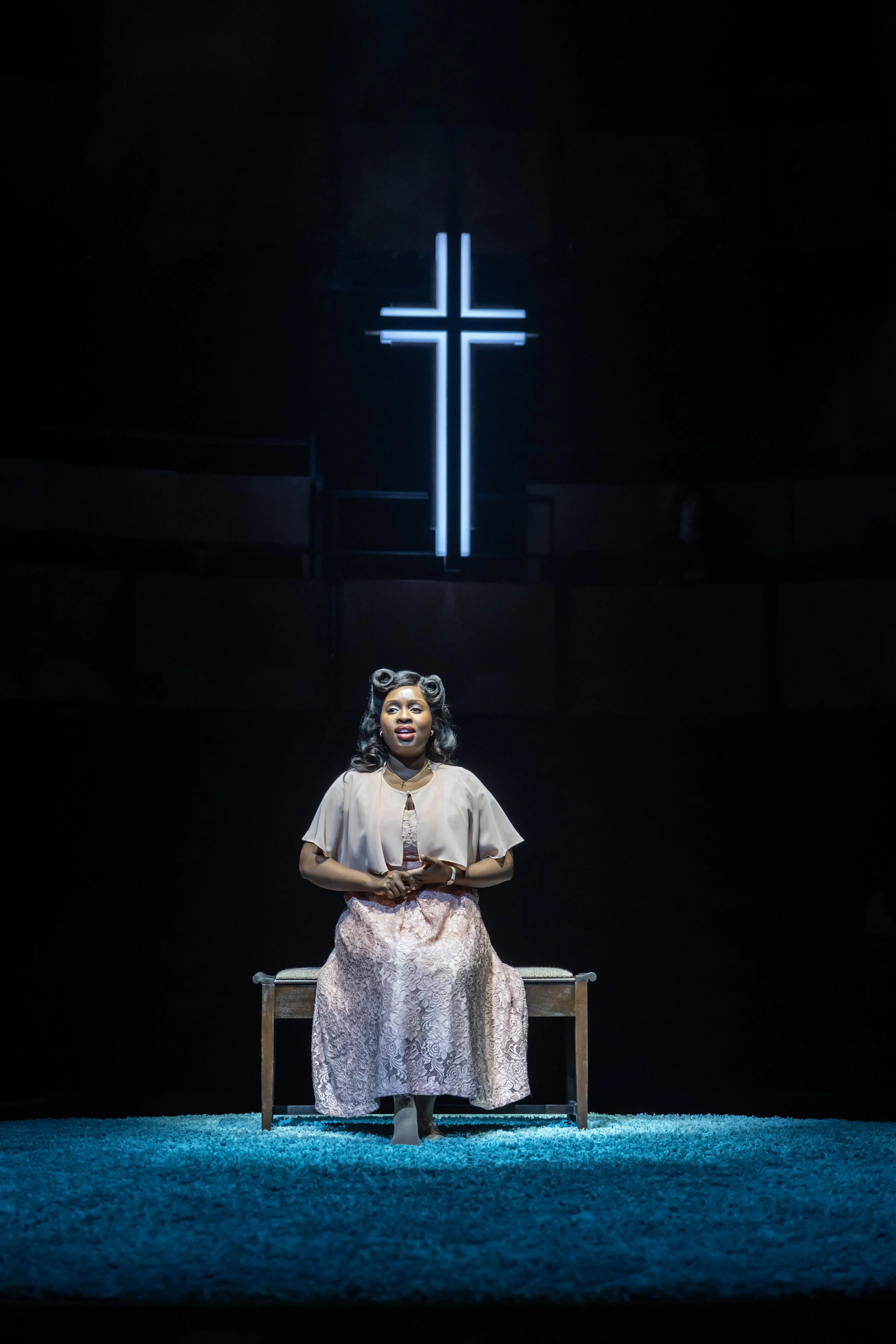
At @sohoplace theatre, we are transported to a funeral parlour in Mississippi. It is 1946 and Sister Rosetta Tharpe, played by Beverly Knight, is meeting her new protégée Marie Knight, played by Ntombizodwa Ndlovu. The stage is warmly lit, with delicately ruched fabric cascading from centre stage and a large cross mounted at the entrance. The cross acts as a quiet visual reminder of faith and redemption throughout the two hour play. The intimate setting allows the audience to feel closely connected to every word, note and emotion shared between the two women.
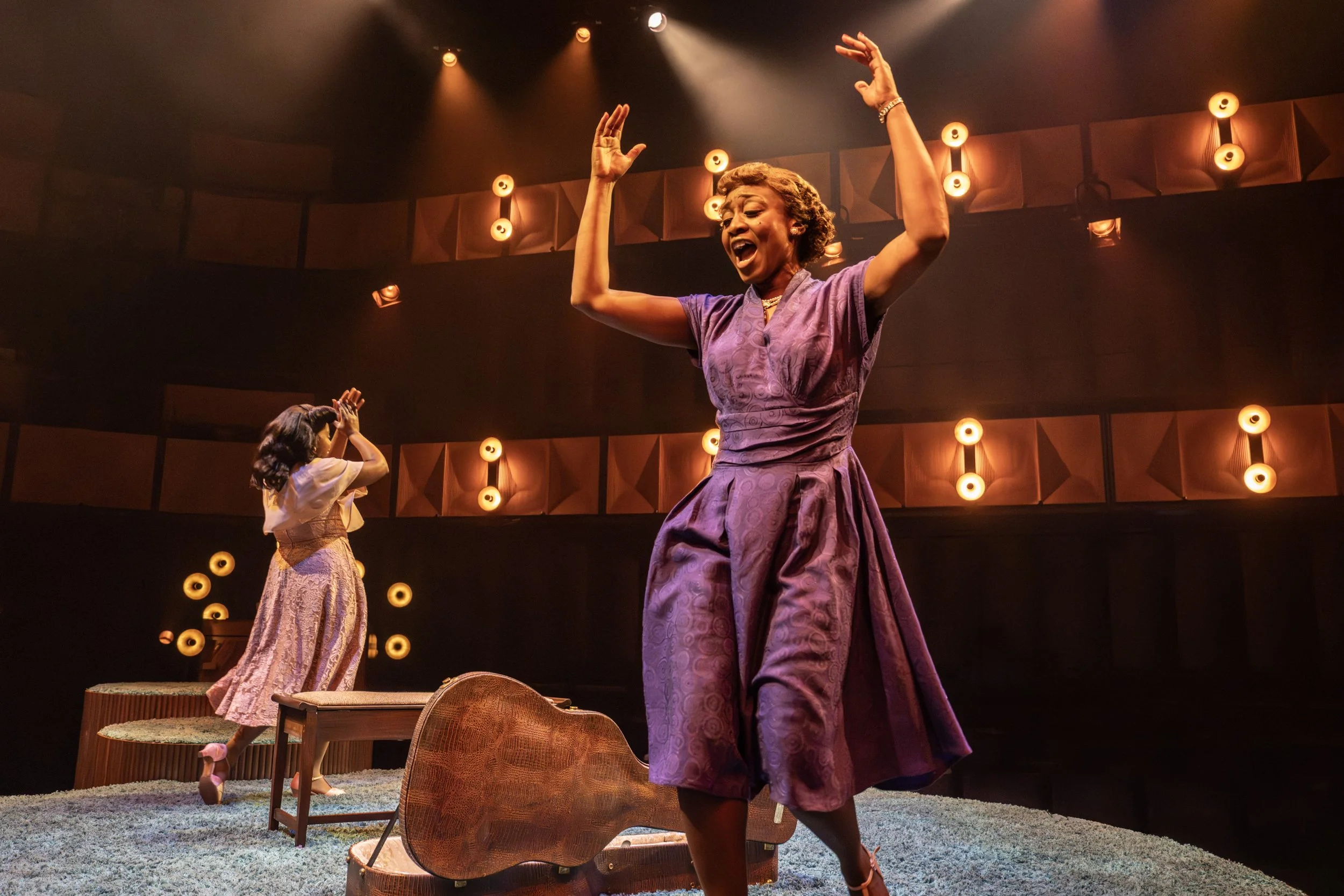
The play centres on the real life partnership between Sister Rosetta Tharpe and Marie Knight. Tharpe, dubbed the “godmother of rock ’n’ roll”, helped shape the sound that would later influence artists such as Little Richard, Elvis Presley and Aretha Franklin. Together, she and Marie Knight recorded and toured across the American South between 1946 and 1949.
Marie enters as a shy and deeply devout 23 year old with formidable talent on the piano. Sister Rosetta is equally committed to her faith, but far less restrained, happily swinging her hips to the gospel rhythms she creates. Through song, the pair explore what working together might look like. Beneath the rehearsals lies the reality of Rosetta’s trailblazing career. She is navigating personal upheaval while building a name for herself under the racial afflictions of the Deep South. As their rehearsal unfolds, the audience is taken through moments of humour, vulnerability and uncertainty as the two women slowly learn to trust one another.
Knight and Ndlovu deliver performances that are nothing short of thrilling. Each musical number lands with power and conviction, drawing audible reactions from the audience. Knight commands the stage as Rosetta, balancing vocal control with the charisma of a performer who knows exactly how to hold a crowd. Her renditions of “Didn’t It Rain” and “I Want a Tall Skinny Papa” are particularly moving. Ndlovu brings a quiet intensity to Marie, her voice carrying warmth and emotional depth in songs such as “Were You There” and “Peace in the Valley”.
Under the direction of Monique Touko, the production moves with confidence, allowing both the humour and the music space to breathe. Lily Arnold’s set design is simple but effective, with every prop thoughtfully placed. Matt Haskins’ lighting and Tony Gayle’s sound design work in harmony to create an atmosphere that supports the performances rather than overpowering them.
Yet, while the production is rich in talent and history, it struggles to fully translate that weight onto the page. George Brant’s script often feels thin, hinting at deeper themes without fully committing to them. The possible intimacy between Marie and Rosetta is suggested but never properly explored, leaving certain emotional threads open. The musical numbers are powerful, but they rarely drive the narrative forward in a meaningful way. As a result, what has the opportunity to be a layered musical drama sometimes feels dramatically static, with the final moments arriving rather abruptly.
Even so, Marie & Rosetta remains an engaging evening of theatre. An all Black women live band underscores the performances with energy and authenticity, while Beverly Knight and Ntombizodwa Ndlovu deliver vocals of extraordinary power. Their performances ensure that the spirit and legacy of these pioneering women resonate after the curtain falls.
Marie & Rosetta is showing at @sohoplace until 11 April.
★★★☆☆
By Eniola Edusi