Dracula by Bram Stoker – ★★★★★
One woman. Twenty-three characters. Unlimited inspiration.
There’s a haunting story trapped inside the walls of the Noël Coward Theatre. A striking new cine-theatre adaptation of Bram Stoker’s Dracula is taking place. Director Kip Williams has reimagined the gothic classic, transforming it into a bold, blood-curdling fusion of film and theatre, and therefore a blend between tradition and innovation.
Wicked star Cynthia Erivo has returned to the stage to take on the colossal task of shapeshifting into twenty-three distinct characters in mind, body, and spirit over the course of an uninterrupted two-hour performance. This concept, combined with a high-tech live show with pre-recorded elements, has invited skepticism from critics and theatre purists alike, who argue that the connection audiences seek when going to the theatre has been tainted by the heavy presence of cameras, projections, and screens. Despite this, the technical elements only enhance Erivo’s performance. Where one-person shows often fail to fill the stage with presence and excitement, Kip Williams’ direction and vision remedy those flaws in an instant.
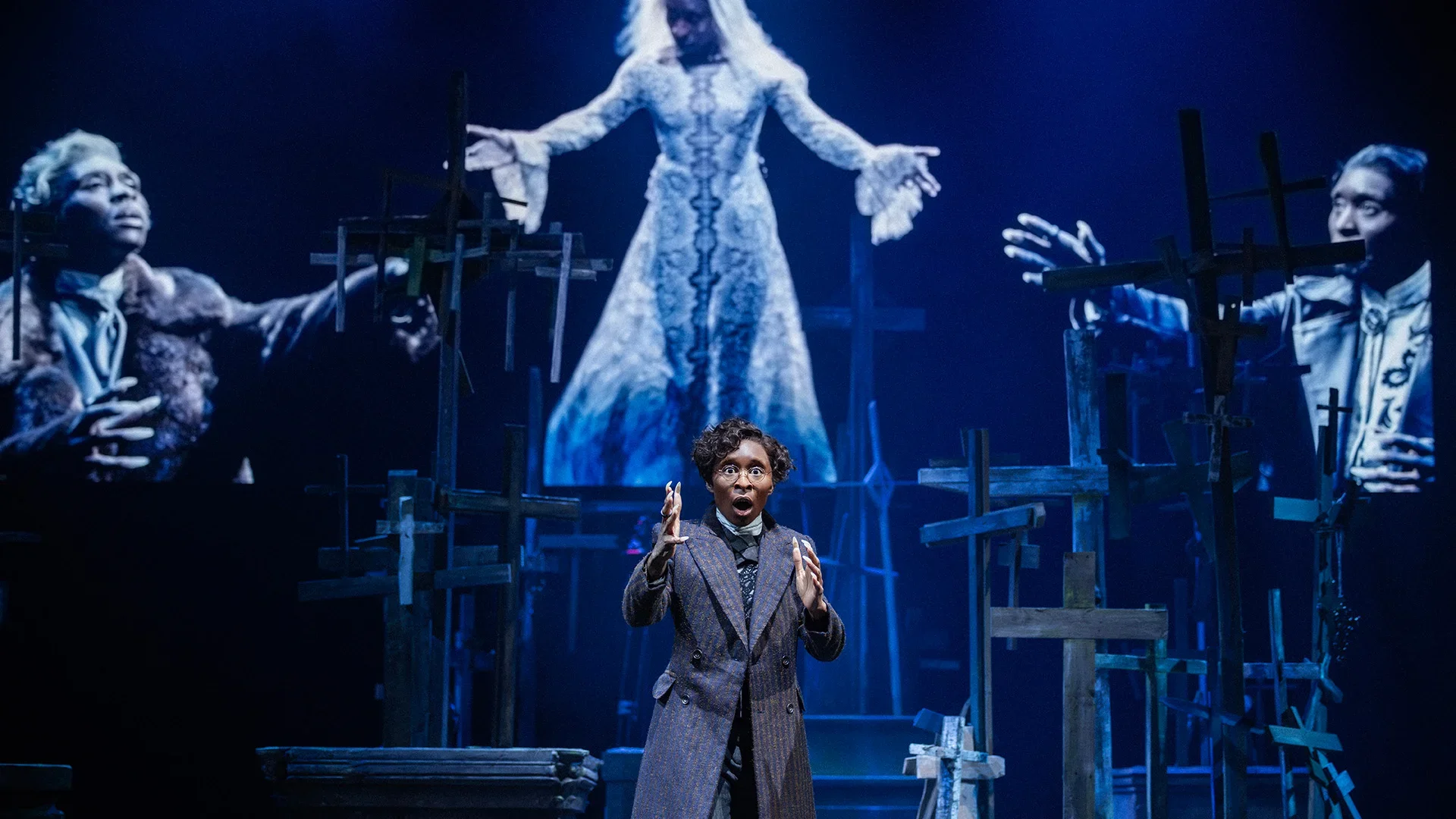
The production’s use of mixed media is nothing short of exquisite with a full team operating cameras on foot to give the audience the sense that we are in some way both the spectator and a fellow cast member. Erivo looking directly into the camera as it is shown on the big screen creates a sense of closeness and emotional intimacy that traditional theatre can sometimes lack, depending on how close you are to the stage.
The screen ascends and descends throughout, guiding the audience’s focus between the screen and the stage, constantly shifting our perspective. It’s poetic, and often feels symbolic of Count Dracula’s omnipresent shadow as he stalks and preys on his victims. In the opening scenes, it feels as though the audience is watching a highly polished rehearsal in real time; at other moments, we are drawn into an almost five-dimensional theatrical space. The first half relies on a simpler set with carefully chosen props, while the second half comes alive with vivid lighting and a rotating room.
The plot remains faithful to Dracula, and Williams focuses on reimagining the story for the 2026 stage rather than rewriting it entirely. The story begins with Jonathan Harker, a young English lawyer who travels to Dracula’s unsettling headquarters, which serves as an effective entry point into the narrative. His ordeal unfolds through both direct performance, and letters and diary entries addressed to Mina Harker, his fiancée. Jonathan observes his rapidly intensifying concern and a persistent sense that he is never truly alone, even when no one is visibly there.
Each character’s narrative overlaps with another, which creates electric chemistry between Erivo and herself playing all the parts, whether on stage or on screen. Mina is depicted as a kind, perceptive and inquisitive woman, while her closest friend, Lucy Westenra’s innocence and hyperfemininity makes her an easy target for the Count’s alluring spell. As the narrative expands, we are introduced to Lucy’s circle of suitors each offering their version of heroicism to help aid Lucy back to recovery after being bitten. We also meet the key figure Abraham Van Helsing, a Dutch professor, who is instrumental in using his knowledge of science, medicine and mysticism to attempt to end Count Dracula’s reign of terror and bloodshed.
While this is the story most of us are familiar with, the second half of the production zooms in on the psychological dimensions of seduction and control, shifting from external threat to internal conflict, as various characters grapple with the contrasts between the undead versus the unclean, influence versus resistance, and desire versus suppression. What could be read as a tale of a monstrous predator becomes a clear commentary on human impulse, and how the enemy that is most potent in our lives is often ourselves. How far will we go to indulge in our desires, and how much do others suffer due to this selfish pursuit?
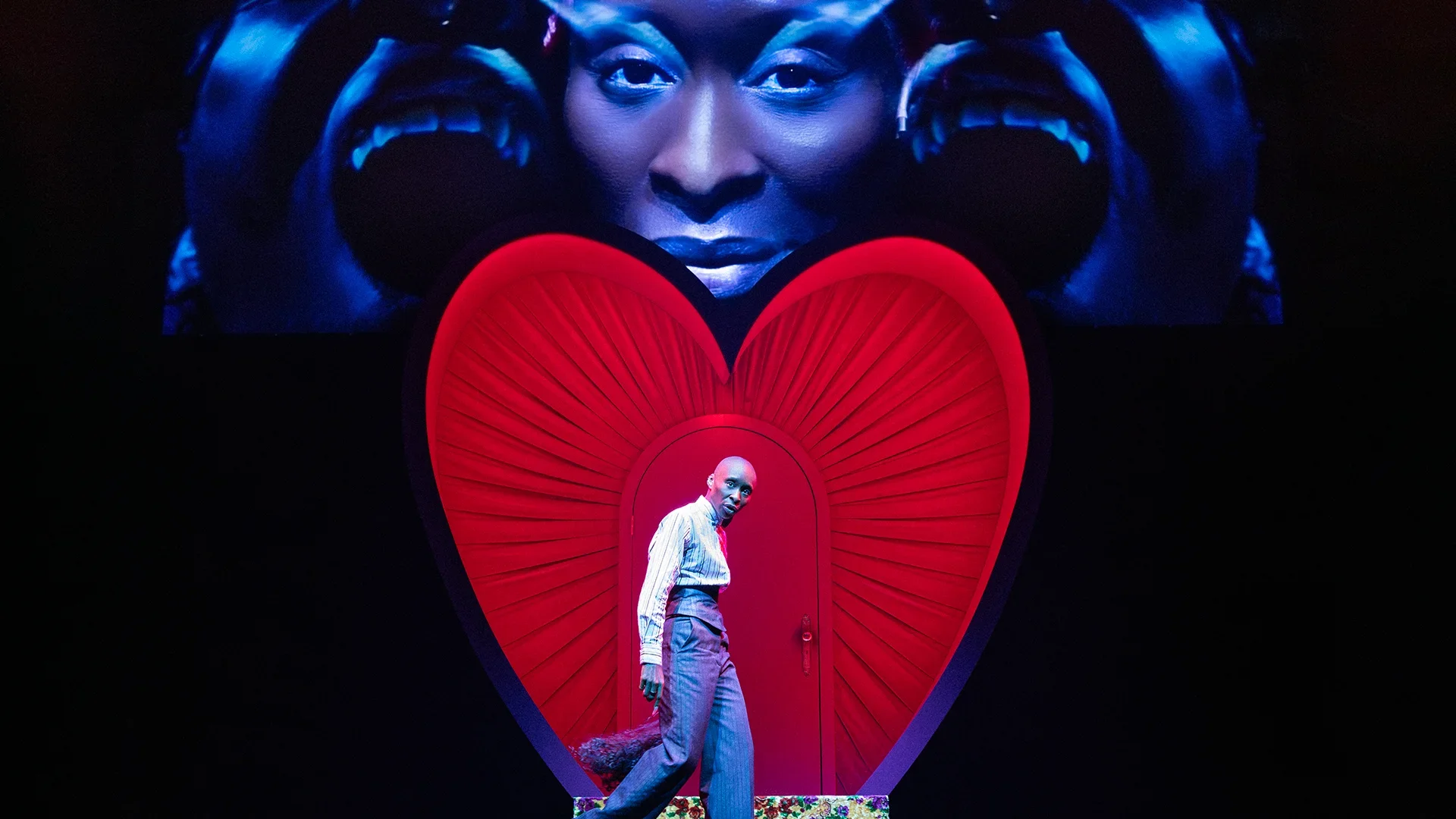
This sentiment is so accurately depicted through the eroticism of the scene that amplifies the sounds and look of modern club culture with bright pink lights, and thumping beats. Culturally speaking there is a current loud resurgence of club-inspired music coming to the forefront of the music charts from Charli xcx to Madonna. While this momentary atmosphere might seem too unorthodox and un-Victorian to be placed in the production, it draws our intention to how intoxicating our desires can be to ourselves and those around us.
After the curtain call, I was still in awe. This wasn’t due to the sheer scale of the production and its moving parts, but to the culmination of excellent artistry from everyone on stage and behind the scenes. For those who may not feel naturally drawn to Stoker’s original novel or its countless film adaptations, this version offers something different through its reinvention. Erivo’s performance is monumentally iridescent and intentional. Everything from her distinctive long nails, which are equally glamorous and ghoulish, to her signature shaved head becomes part of the storytelling, as she shifts seamlessly from character to character, embodying distinct backstories, body language, and cadence. Dracula is sharp, chilling and beautifully choreographed. It is difficult to imagine a performance surpassing this in the future, not because theatre cannot evolve further, but because it pushes the boundaries of what is expected of a West End show.
★★★★★
By Nadia Mantock