Nine Sixteenths by Paula Varjack – ★★★★☆
When Janet Jackson started her performance for the 2004 SuperBowl halftime show, she was one of the most influential and successful musicians in the world. By the time the show had ended with Justin Timberlake ripping part of her costume off and exposing her to more than 100 million viewers for nine sixteenths of a second, the decline of Jackson’s career had begun. According to Nine Sixteenths, that slump would last for more than a decade. For Timberlake, the night would be the start of a meteoric rise.
Paula Varjack, the creator of Nine Sixteenths running at Brixton House, uses this moment, and the double standards which came crashing down upon Jackson, to hold up a mirror to the development of her own career as a Black woman in the performing arts. Leaning into the nostalgia of the days of rushing home to watch Top of the Pops, she describes the seismic impact of the iconic Jackson moments which studded her childhood and adolescence, from Jackson’s Poetic Justice box braids to the notoriously difficult dance routine of Rhythm Nation.
Alongside Pauline Mayers, Julienne Doko, and Chia Phoenix, who also contributed to devising the performance, and Vinessa Brant and Cherie Gordon incorporating British Sign Language, Varjack delves behind the scenes of the forces mounted against Jackson after the SuperBowl. These range from the creators of YouTube, who capitalised on the voyeurism surrounding Jackson’s humiliation to start the platform, to Les Moonves, the former CBS CEO, and the consequences of his fury over the incident.
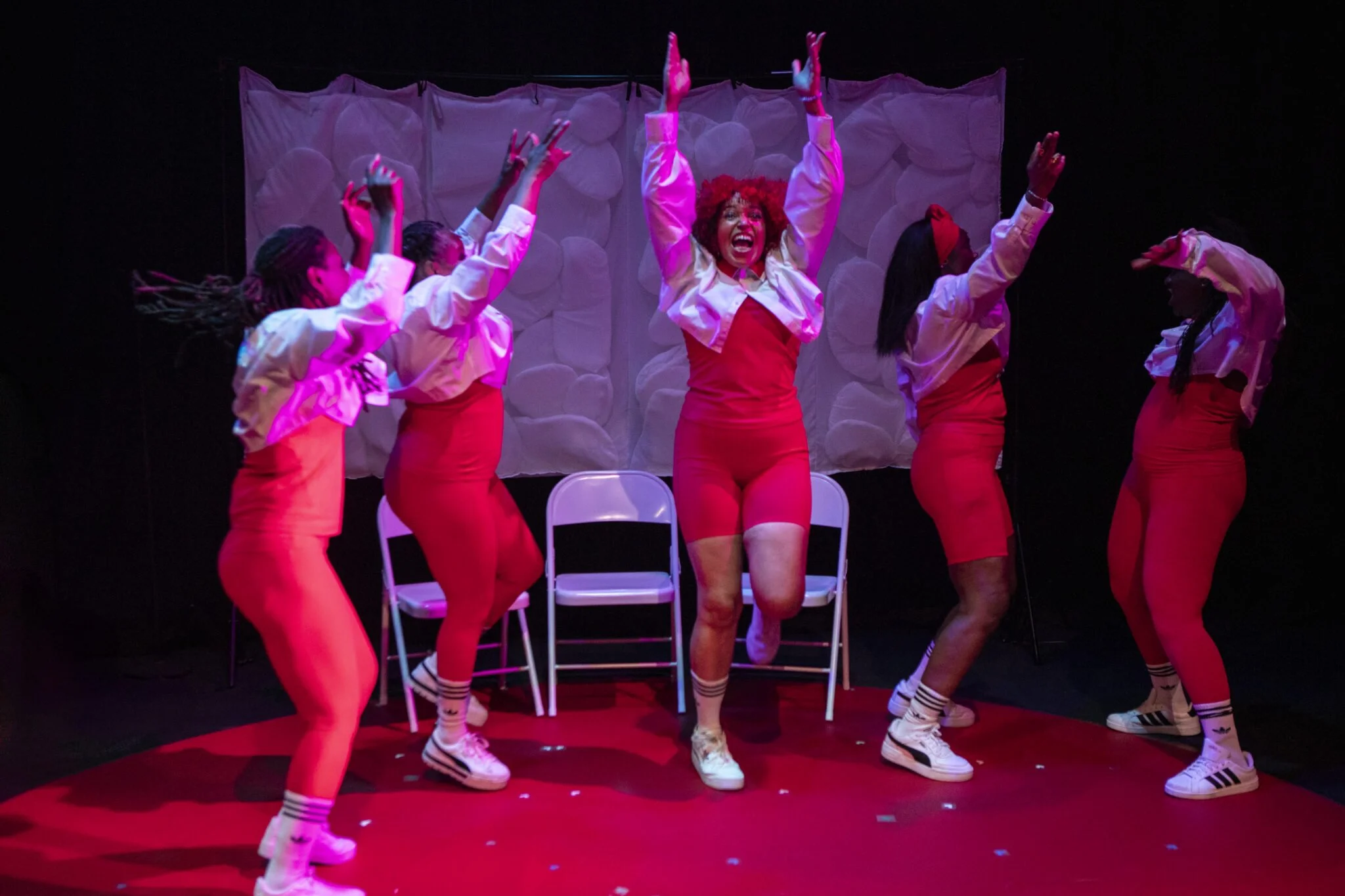
The ensemble uses puppetry, lip syncing and dance to re-enact the fallout of this “defining moment” of Jackson’s career. Some segments extend a little too long, and the number of themes on the table (including instant gratification culture, the influence of pop, and political violence) can be disorienting. But the performers are all given moments to blaze with power: Phoenix undergoes a visceral transformation to voice the outrage of real complaints levelled against Jackson and Timberlake, while Mayers and Doko excellently capture an excruciating Late Night interview where Jackson pleads to move on from the wardrobe malfunction.
Although the opportunity to luxuriate in the highlights of Jackson’s career before the SuperBowl feels golden, one of the most powerful moments of the show is when the performers drop their personas and acknowledge their fears as Black women over the age of 40 in the performing arts. In response to the audience’s knowing laughter at one of her admissions, Mayers added grimly, “you’re laughing because you know.”
When the performers are given the opportunity to imagine their own ideal, “splendiferous” performance to repel these fears, you wish for more time and space for each of them to achieve their visions.
★★★★☆
By Olivia Konotey-Ahulu