Bengal Tiger at the Baghdad Zoo by Rajiv Joseph – ★★★☆☆
Leaving the Young Vic Theatre after watching Rajiv Joseph’s Bengal Tiger at the Baghdad Zoo, I’m reminded of the hook from No Church in The Wild. Kanye West’s dulcet tones sing “Human beings in a mob. What’s a mob to a King? What’s a King to a God? What’s a God to a non-believer, who don’t believe in anything?” In Joseph’s absurdly comic, and deeply provocative war piece, the ghost of an atheist Bengal tiger haunts the living in pursuit of where God is in a war-torn world. Surreal and daring, Omar Elerian directs a fragmented piece, that explores the tragedy of the 2003 Iraq war in a way that feels quite intimate, but also challenging when placed in the context of the world today.
Set against the backdrop of a broken Baghdad, Kathryn Hunter plays a tiger, abandoned during Iraq’s plight at the city zoo, lamenting about the ignorance of lions and human beings alike. Trapped in a cage that sits in front of rubble and wrecked buildings, she speaks to the audience inviting us into her stream of consciousness, while Kev (Arinze Kene) and Tom (Patrick Gibson), two ignorant American soldiers provoke it to anger. The tiger, true to its instincts, bites off Tom’s hand prompting Kev to fatally shoot the tiger, which sets off a devastating chain of events. Along the way we meet Musa (Ammar Haj Ahmad), the former gardener of Saddam Hussein’s sociopathic son Uday (Sayyid Aki), who now works as a translator for the American corps. He is tormented over the rape and murder of his sister by Uday’s bullet-riddled ghost and struggles to rid himself of the guilt in order to navigate his new life.
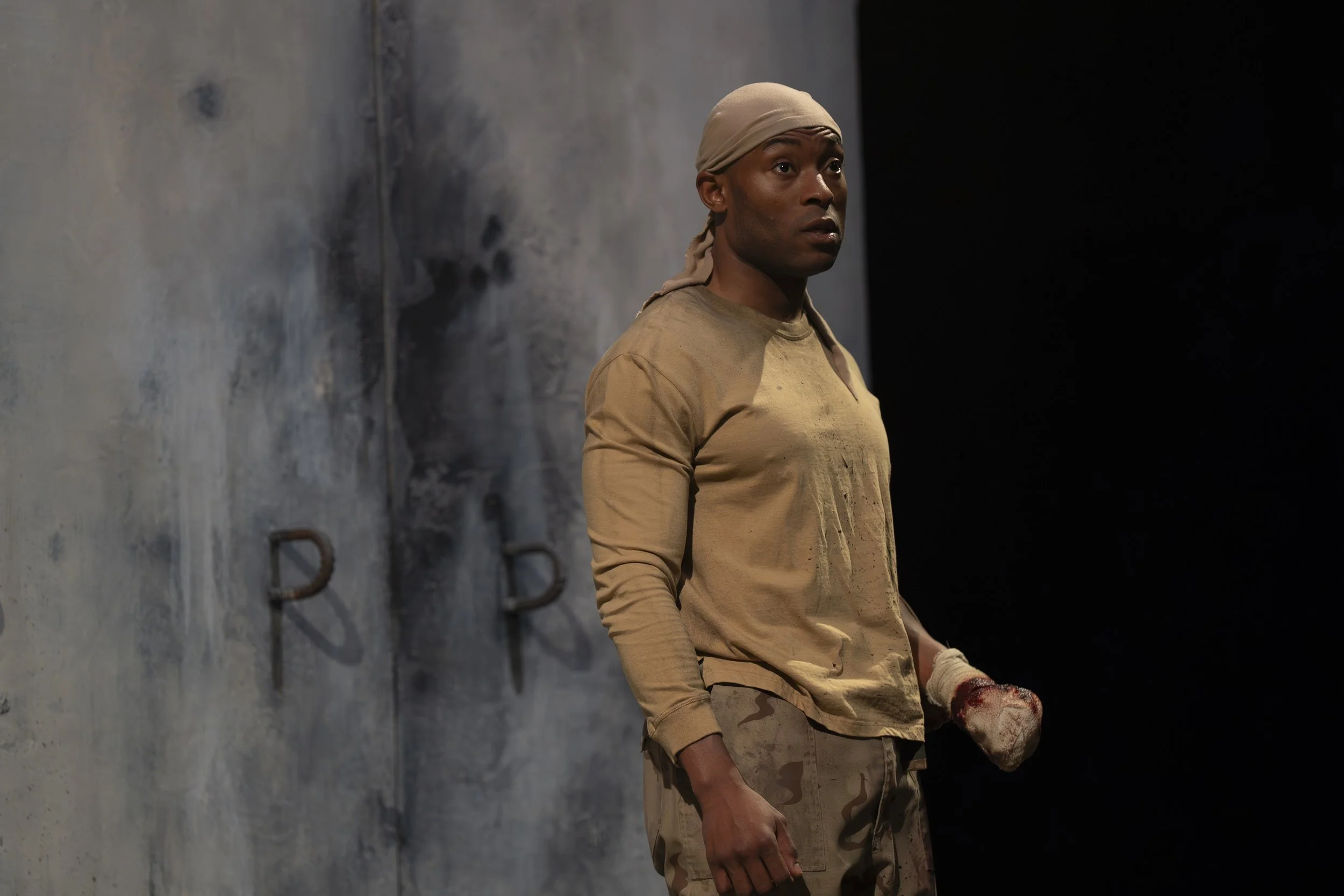
Guilt is one of the play’s most recurring themes, and between the living and the dead, it seems that there is no escape from it no matter how hard they try. Kev, initially triumphant begins to feel guilty for killing the tiger, and Tom feels guilty for abandoning Kev after returning to the war, to find his partner in the psych ward. The tiger is racked with something that seems like guilt for mauling two children to death before being brought to Baghdad, and throws the question of this guilt to “God”: can she really be blamed for the animalistic traits she was born with? The characters are trapped in a never ending chain of recycled suffering and guilt that follows them into the “afterlife” where they are stuck in limbo, searching for answers and haunting each other
The play also cleverly explores the impact of war PTSD and trauma, and the different ways that this can manifest in people. The 2003 Iraq war shook the world at the time, but the play’s messaging still feels contemporary. It paints the men in the play in an ambiguous light, as they are all somewhat complicit in some sort of violence, but they are also victims to a regime that is bigger than them. The portrayal of women and girls, on the other hand is more complicated. The female characters in the play are subject to the violence and desires of the men, and arguably are only victims. We do not hear from them however, not fully. They are seen, but their characters impart no explicit thoughts or feelings. Sara Masry doubles as the sister of Musa and sex worker hired by Tom, and both character are mere pawns to the men that are using them. Hala Omran plays a leper, who comes to the aid of Tom when he is dying in the desert, but ultimately cannot (or will not) save him. The silencing of the play’s female characters, could just be reflective of the realities of war for women and girls, but there is no real way to tell.
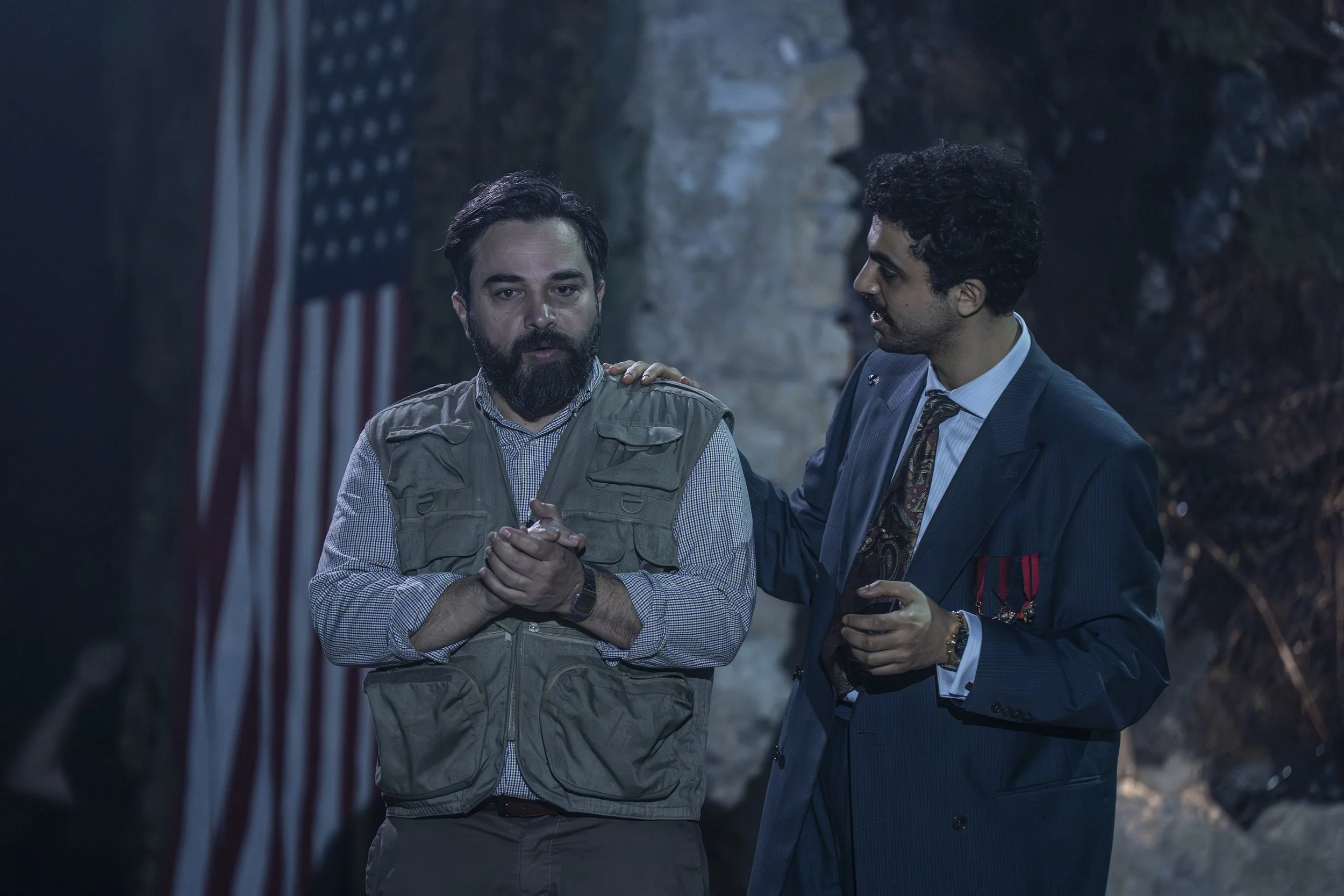
The play’s cast do a brilliant job of bringing the characters to life. Kene is dynamic and explosive in his solo scenes, and is able to bring nuance to his dim-witted and clumsy character. The play’s comedy is consistent throughout, but most apparent in Hunter’s performance as the Tiger whose dry and raspy voice makes for a genius take on a truly one of a kind character. Each character is believable, and able to balance the play’s humour with the seriousness of its subject matter.
Bengal Tiger at the Baghdad Zoo is a complex show, that sometimes feels confusing. The play’s plot and dialogue is so scattered that it feels slightly chaotic. It deals with particularly heavy themes in an original and bold way, but I also left with the feeling that I didn’t get all of it. Dark and unflinching, Joseph’s play is definitely not the easiest watch but still impactful. The play’s writing showcases Joseph’s wit, and its visual storytelling is a testament to its direction.
★★★☆☆
By Melody Adebisi
Bengal Tiger at the Baghdad Zoo is showing at the Young Vic Theatre until 31 January.