Ballet Black: Shadows by Cassa Pancho – ★★★★★
The practice of “shadow work” is defined as the exploration of a person’s “shadow self”, in essence the repressed or hidden parts of one’s psyche including their fears, desires and traumas. Developed by psychologist Carl Jung, its purpose is to help people grow by exploring these darker parts of ourselves in order to create a whole identity that includes the not-so-pretty things we are scared to bring to light.
What happens when you take a tentative step, or bold leap into this darkness? This is the very essence of Ballet Black’s deliciously dangerous double bill SHADOWS comprising A Shadow Work choreographed by Chanel DaSilva and the adaptation of Oyinkan Braithwaite’s My Sister the Serial Killer.
Making its debut at Sadler’s Wells, Cassa Pancho’s Ballet Black continues to prove why it had a stellar run for almost a quarter of a century. Beyond the skill of the dancers, and the significance of an all black ballet troupe, Ballet Black continues to create moments that provoke and resonate. The double bill begins with A Shadow Work. The principal dancer (Taraja Hudson), dressed in white linen and lace begins her solo, encased in darkness with a single spotlight bringing centre stage the anxiety her character feels. She is controlled chaos, frantic movements with tight precision, she seems lost in her own thoughts.
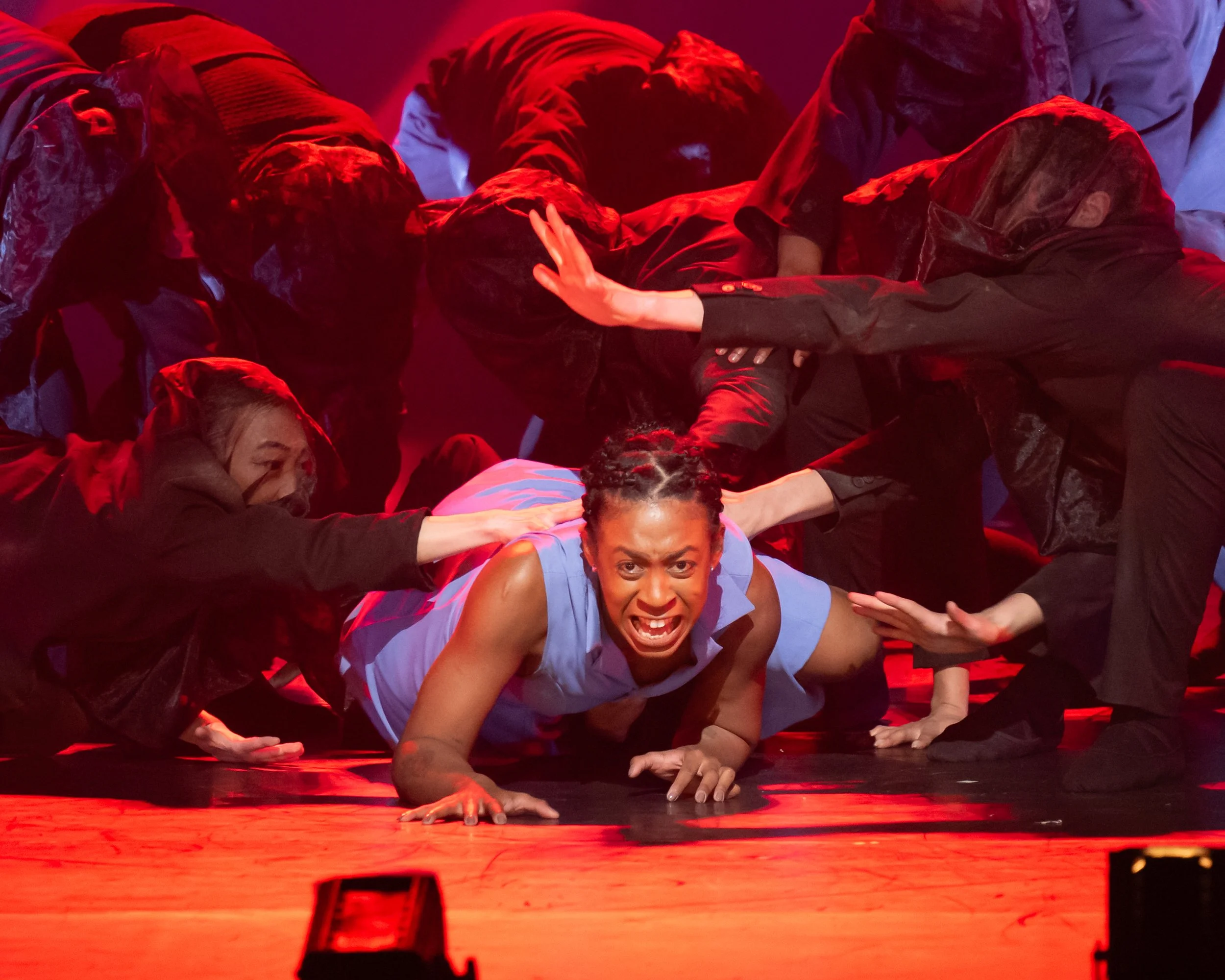
She is joined by our second principal dancer Acaoã de Castro, dressed in all black to represent her shadow and they begin a chilling duet. Eventually, the stage is filled with dancers, donning all black and embodying the mind of Hudson’s characters. They entice her in these dreamlike sequences, as she battles with the desire to fully embrace the shadows. As we venture deeper into her psyche, the darkness looks less like an opposing power that she’s fighting, and you get the sense that is healing her, transforming her.
David Plater’s lighting design is immaculate. He not only creates shadows of the shadows, he uses strobing and fractured lights to present Hudson’s character's state of mind. The spotlights shift between deep greens and reds as she eventually frees herself entirely. The music swells, and at some point stops completely to allow the dancers bodies to say all they need to say, and it is an exhilarating experience.
We return from the interval to find ourselves in the heart of Lagos, where sisters Korede (Sabela Coracy) and Ayoola (Helga Paris Morales) are moving a dead body. The culprit is Ayoola, and this is no secret: she is beautiful, magnetic and sees men as toys she can quite literally get rid of at will. Her sister Korede is steady, self-contained and there to pick up the pieces. When Ayoola’s bloodlust hits too close to home, Korede’s life becomes a mission to save those around her from unbridled chaos. Braithwaite’s divisive and provocative finds its stride in Ballet Black’s adaptation.
The performances of the dancers are so strong, the thought of there being dialogue in the story feels unnecessary. The performers are bold, bringing stunning characterisation to the choreography and keeping the audience engaged throughout.
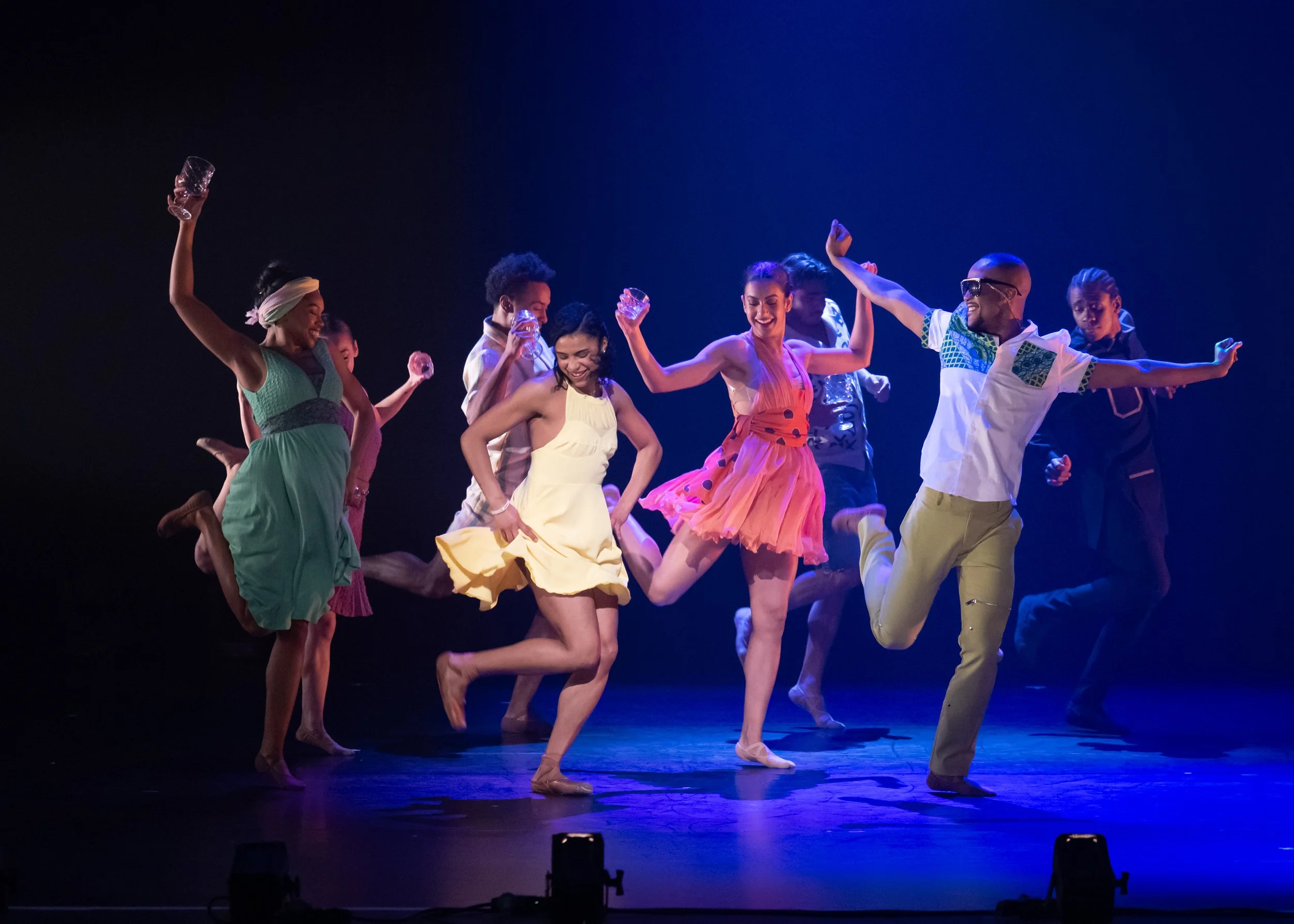
The story becomes operative in the hands of the choreographer and the bodies of the dancers, and we get a female-dominated spectacle that is enthralling. Morales is light and air as Ayoola, twirling in a yellow dress that emphasises her carefree nature, and lack of concern for her crimes. Coracy as Korede serves as her shadow, contemplative and reactive, and battling the darkness that seems to evade her sister.
The supporting cast fill the stage with brightness and heart, and makes the show’s 1 hour and 50 minute run time feel like a 20 second TikTok.
Encompassing female rage, lighting design that makes you feel like your eyes are deceiving you and skillful, incredible dance, this is an excellent double bill. Ballet Black and its entire team put on a show that encourages you to sit in the dark for a moment, and see if you can find the light.
★★★★★
By Melody Adebisi
Ballet Black is showing at Sadlers Wells Theatre until 29 November.