THE RENDITION MEETS MONIQUE TOUKO
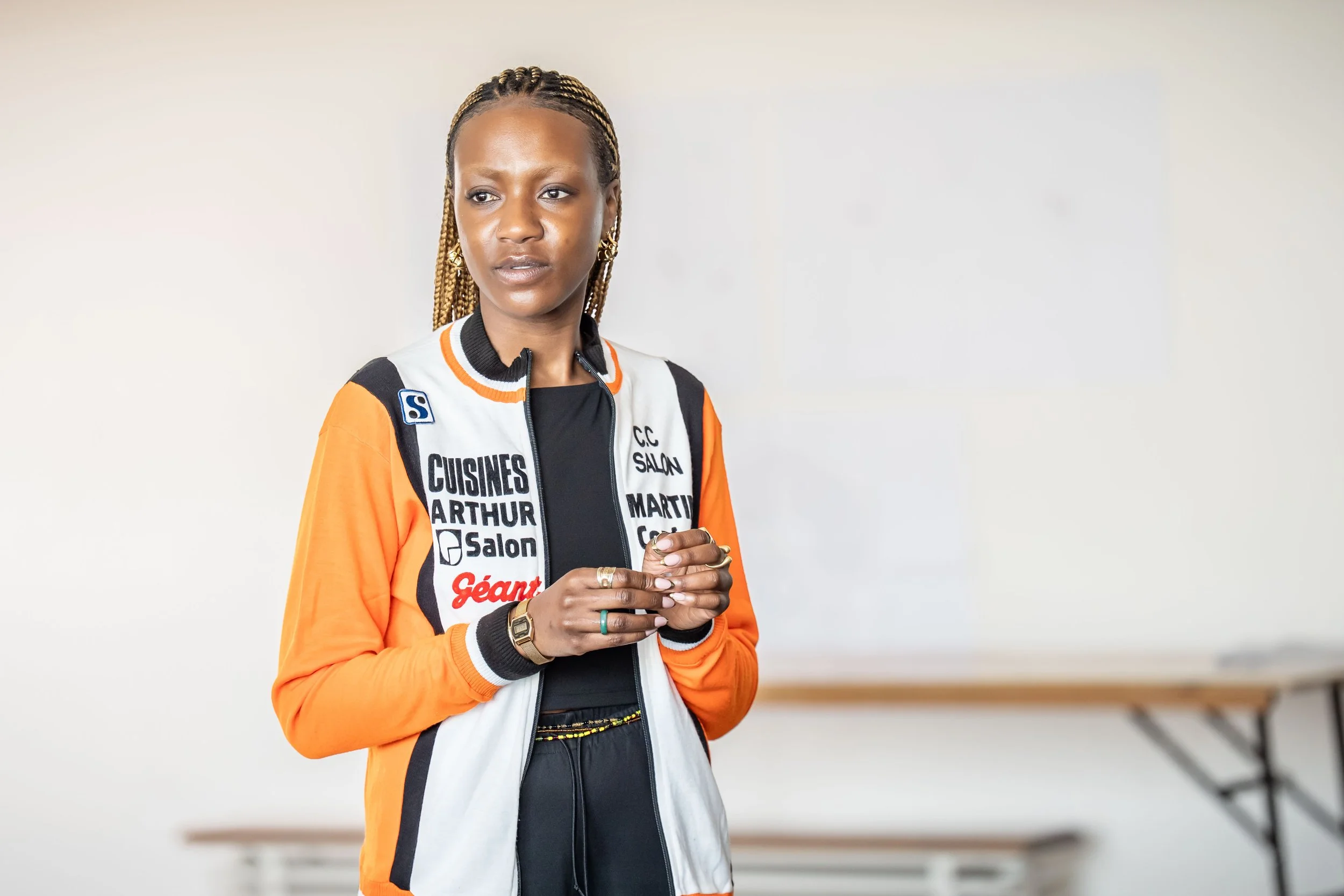
Image Credit - Mark Brenner
When Monique Touko enters a room, the atmosphere shifts. I bumped into her the week before our interview at a behind-the-scenes content day for Jaja’s African Hair Braiding at the Lyric Hammersmith, and the warmth that followed her was immediate. Cast members greeted her with open arms and bright smiles, and the energy lifted straight away. It was a small moment, but one that speaks volumes about the kind of director Monique is: present, trusted, and deeply invested in the people she works with.
2026 is set to be a defining year. Alongside her West End directorial debut with Marie and Rosetta, Monique is also directing the UK tour of The Boy at the Back of the Class and Jaja’s African Hair Braiding. It’s a trio of projects that reflects her range and her commitment to stories that centre culture and community.
We begin with a few ice-breaker questions, and even with these, her intent is clear. When asked whether she’d rather direct new plays or direct revivals for the rest of her career, she answers without hesitation: “New plays. There’s something quite special about being the first originator of the production. You have the opportunity to create the blueprint, and that excites me.” Scale matters too; if she had to choose, she’d pick large theatre houses and ensembles rather than independent spaces and a small cast. Although acknowledging the intimacy of the latter, Monique gravitates to the spectacle and epic-ness of many bodies sharing a huge stage.
That love of scale makes Marie and Rosetta, an intimate two-person show, feel like a fascinating contrast. The play follows Sister Rosetta Tharpe, the godmother of rock ’n’ roll, and her collaborator Marie Knight in Mississippi, 1946, as they prepare to tour the segregated south of the United States. It’s a story about music, faith and ambition, told through gospel and rock.
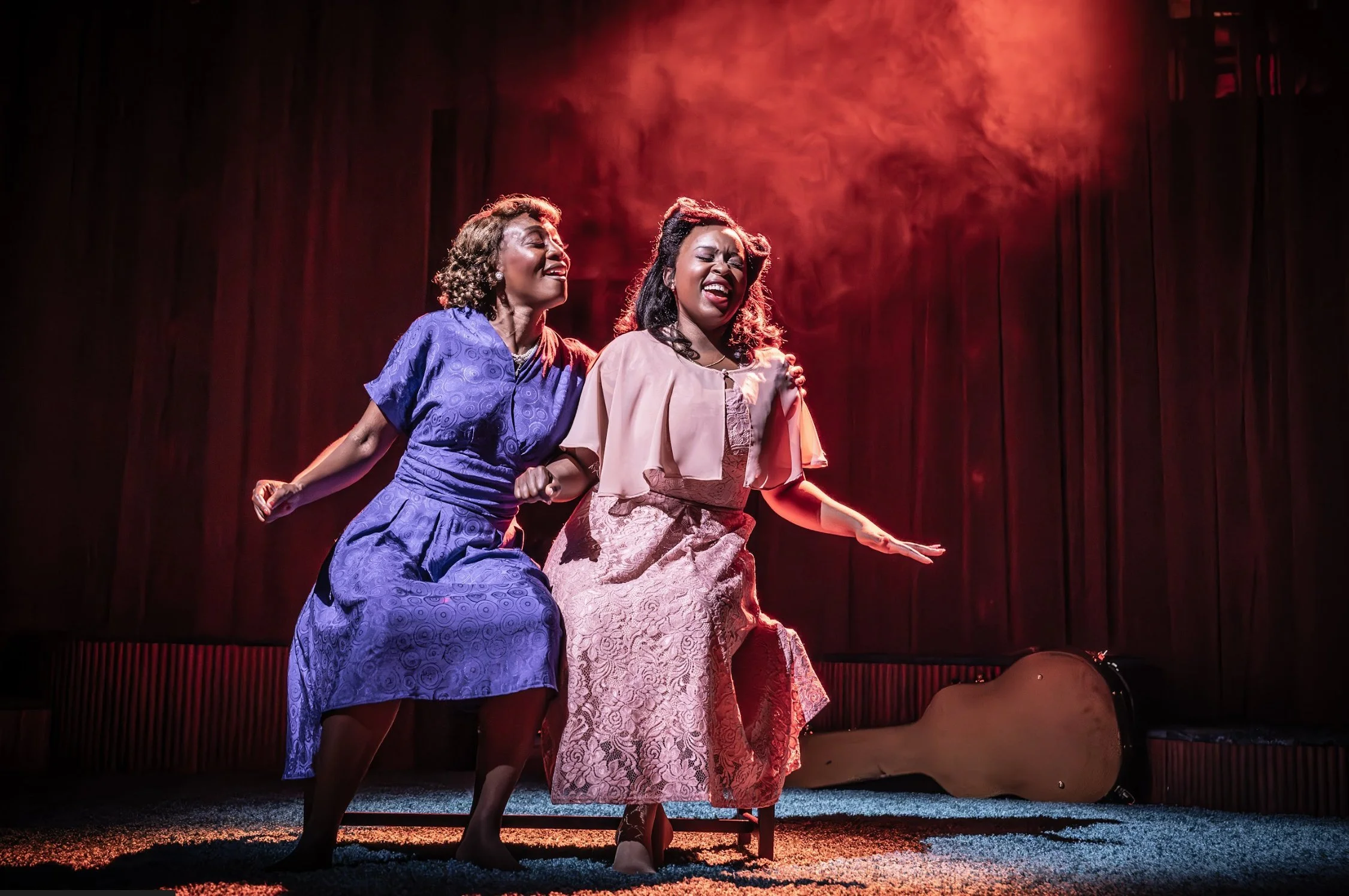
Monique first encountered the play when it was passed to her by Christopher Haydon, Artistic Director of the Rose Theatre. Reading it in Wimbledon Library, she was completely absorbed. “I couldn’t put it down,” she recalls. Her last play with a cast of two, Fair Play at the Bush, had left her eager to return to the form. “I was drawn to the themes and I saw myself in it. I’ve always wanted to do a musical, and this was a play with music. It felt like a really fitting next step.”
The production’s journey has been carefully built. From the Rose Theatre to Wolverhampton Grand, then Chichester Festival Theatre, and now the West End, each stop has been essential. Wolverhampton, Beverley Knight’s hometown, proved especially powerful. “Her audiences and home support gave us momentum,” Monique explains, which helped to carry the show forward. Now staged in the round at Soho Place, the play feels new again. “To be in the pinnacle of UK theatre in the West End feels like things are evolving the way that they should. Everything that’s happened has been necessary for the next step of the play.”
“Reclaiming Sister Rosetta Tharpe’s legacy is central to the production, but Monique is clear that this isn’t about imitation. Her approach prioritises ownership. “This is not a tribute show or an impersonation,” she remembers telling Beverley Knight early on. “This is your take on Sister Rosetta. Free yourself up and let’s go on a journey.””
Research is vital, but so is resisting the urge to be confined by history or previous productions, particularly as this marks the play’s UK premiere after having its success in the US.
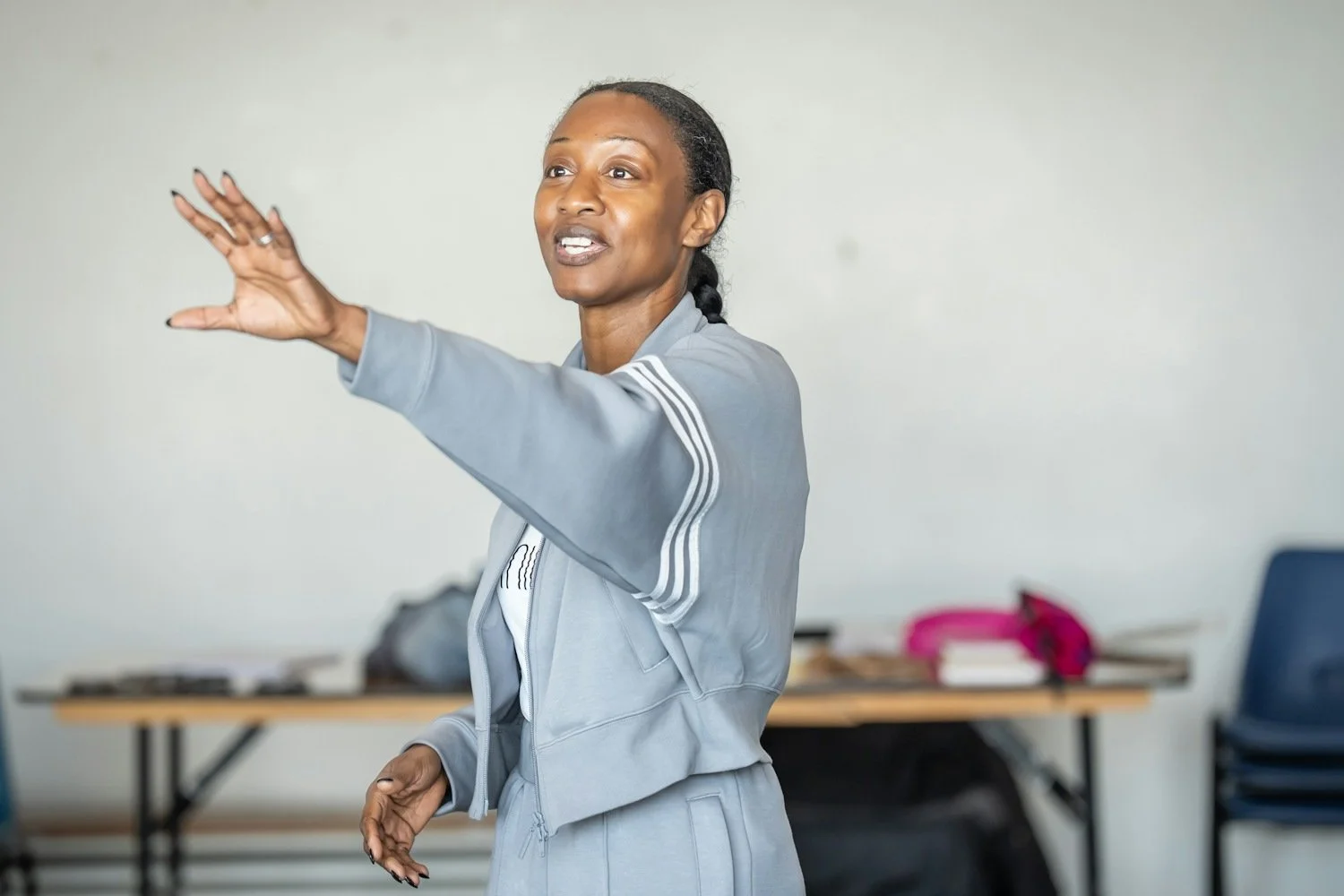
That sense of balance extends into the rehearsal room, where Monique is working with an artist of immense experience in Beverley Knight, alongside Ntombizodwa Ndlovu, who makes her West End debut as Marie Knight. Rather than hierarchy, Monique describes a space of exchange. “What’s beautiful is that the relationship between them reflects what’s happening in the play,” she says. “Bev is so gracious, she’ll always make space and time for others. And then you have Zo, who’s like a sponge, taking everything on board. It’s beautiful that they get on so well” There’s a symmetry in how they support and learn from one another that deepens the work.
Much of Monique’s career has been defined by her commitment to Black voices and Black authorship, from G to Wedding Band to School Girls; Or, The African Mean Girls Play. When we talk about why this matters, her response is deeply personal. “Every single project I’ve done has been an opportunity to learn a bit more about myself,” she reflects. “It feels spiritual, and it feels necessary.” In a post-2020 landscape, she feels increasingly able to speak unapologetically through her work, building on the foundations laid by earlier generations of Black theatre-makers.
“School Girls remains a turning point. This was a production that was unapologetically Ghanaian and widely visible. For Monique, it affirmed a belief she carries into all her work: that specificity is not a barrier to connection. ”
That belief links Marie and Rosetta with Jaja’s African Hair Braiding, which she is also directing this year. Though the settings differ; one rooted in musical history, the other in the intimacy of a hair braiding salon, both centre Black women and lived experience. “The more you lean into the truth and authenticity of a story, the more universal it becomes,” she says.
When I ask what she hopes audiences take away from Marie and Rosetta, her answer is joyful and direct. She wants people to feel electrified by the music, moved internally as well as externally, and, perhaps most importantly, a little annoyed at themselves for not knowing these women sooner. “I want it to feel like they’ve been to a concert,” she adds. “And I want people to have a really nice time at the West End. Make it a date. Bring a friend.”
Looking ahead, Monique's ambitions continue to expand. She speaks excitedly about full-scale musicals, Greek stories, Shakespeare and opera, and about work that sits between forms rather than neatly inside them. Music remains a throughline, through her involvement with The Ubunifu Space and collaborations beyond theatre, as she continues to explore what beauty can be produced when different art forms collide.
Marie and Rosetta runs at @sohoplace from 28 February to 11 April 2026.