The Authenticator by Winsome Pinnock – ★★★☆☆
"Who lives, who dies, who tells your story?" The closing song from Lin-Manuel Miranda's Hamilton soundtrack, echoes through Winsome Pinnock's new play from the first scene to the last. The song explores the tales of history's survivors, those who endure, and those who manage the narrative they leave behind. That same thread weaves through The Authenticator, directed by Miranda Cromwell.
Three women, one history, a range of competing truths.
The Authenticator explores how we confront our ancestors’ roles in history, in this case the transatlantic slave trade, and how we respond to what we uncover. Do we seek to rewrite it, or do we embrace it and strive to do good in response to it?
Abi (Rakie Ayoola) and Marva (Cherrelle Skeete) are historians invited to the stately home of Fenella (Sylvestra Le Touzel). She has recently unearthed journals belonging to her ancestor, Henry Harford, who left England in the 18th century with nothing and departed Jamaica owning a plantation and considerably more.
Fenella lives in and manages the stately home, passed down through the Harford lineage built on compensation payments received when Britain abolished slavery. She wants to verify the records found, and Marva, witty, talkative and eager, proposes that she and her more reserved, methodical mentor-professor, Abi, take on the role of authenticators.
As the play develops, what seems like a simple verification of documents becomes an emotional exploration of identity and lineage. Abi, Marva and Fenella realise they have more in common than they think. From shared university experiences to a common surname, over the next 90 minutes the trio confront their differences through a range of emotions and questions.
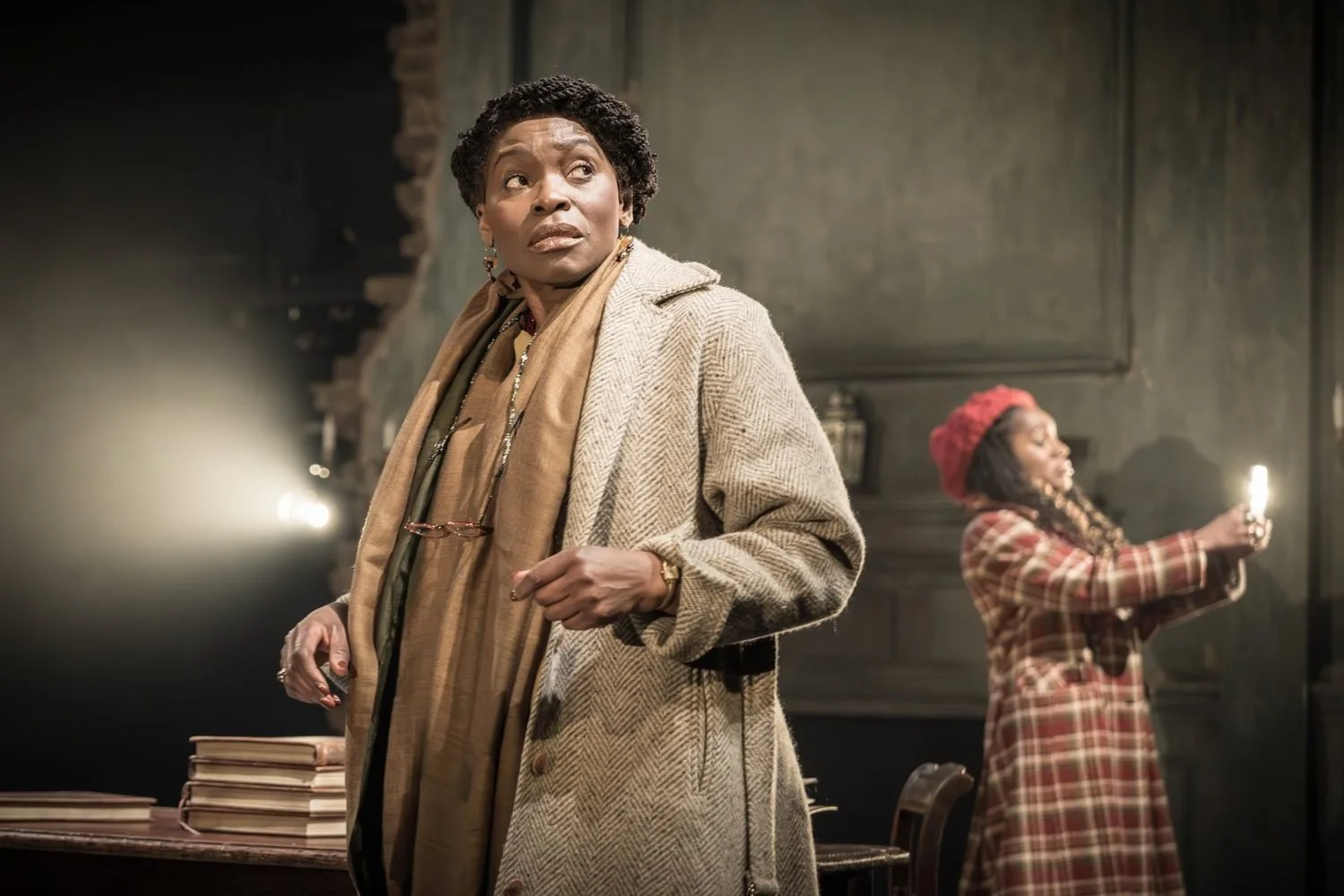
What begins as a house tour leads to the discovery of a statue bearing the same name as Marva’s grandfather. We learn that Abi descends from slave-owning Nigerian nobility; whilst Marva is a descendant of enslaved Ghanaians transported to the West Indies; Fenella stands squarely in the middle of it all, her inheritance the very catalyst for their reckoning. .
The question of rewriting history that Pinnock presents is an interesting one. What if you could write your desired past into reality? What does it change, and how do you respond to those changes after the fact? What if it alters things for those around you? All three women find themselves adapting to new information in Henry’s journals, which reframes who they believe themselves to be, leaving them unsure of what to do with it.
Jon Bausor's set design is a quiet triumph, expanding and contracting to conjure the various rooms of Harford House. From the basement to the maze to the study, and with the addition of a moving ceiling, the set carries a sense of theatrical flair that supports the storytelling, acting almost as a fourth character.
Cromwell directs the cast fluidly, and throughout the 90 minutes the chemistry between the trio is convincing. Shelley Maxwell’s movement direction is also particularly noteworthy, as the cast make strong use of the stage, engaging both sides of the audience.
Where the play falls short is in its tonal inconsistency. Emotions often escalate abruptly, making it difficult to fully understand their cause. As is often the case with plays that directly address or reference slavery, the subject matter is both difficult and compelling. The questions explored are engaging, however the journey towards answering them can feel disjointed. The play felt closer to humour than drama, and it may have been more effective had it committed more firmly to one.
All in all, The Authenticator seeks to answer important questions that leave you reflecting on your ancestry and your place within history.
The Authenticator is showing at The National Theatre until 09 May.
★★★☆☆
By Eniola Edusi