“The sky doesn’t want you to visit it. It wants you to become it. To break open your mind and pour your dreaming into it like fuel”
On 24 October 1964, Zambia celebrated its independence from British colonial rule. With newfound hope for their own imagined future, and a new age in the nation’s history, came a new flag. A portrait of Zambia’s people, its fight for independence, natural resources and mineral wealth, represented by its black, green, red and orange. And then the African Fish Eagle, an emblem of the ability of its people to rise above their circumstances, to soar towards their own freedom beyond what human eyes can see. It makes sense then, if its nationhood is rooted in a motion that defies gravity, that it would be a country that sets its eyes on the moon and beyond. Ryan Calais Cameron’s The Afronauts tells the epic story of the souls who made up Zambia’s Space Programme, known as “The Afronauts”, whose ambition was to be the first nation in the world to send a man to the moon. Monique Touko, with Cameron as director, creates a play that teaches you that the stars are only as far as you make them; a play that puts African pride and self-determination first, and a production that encourages us to sow into our own imaginations.
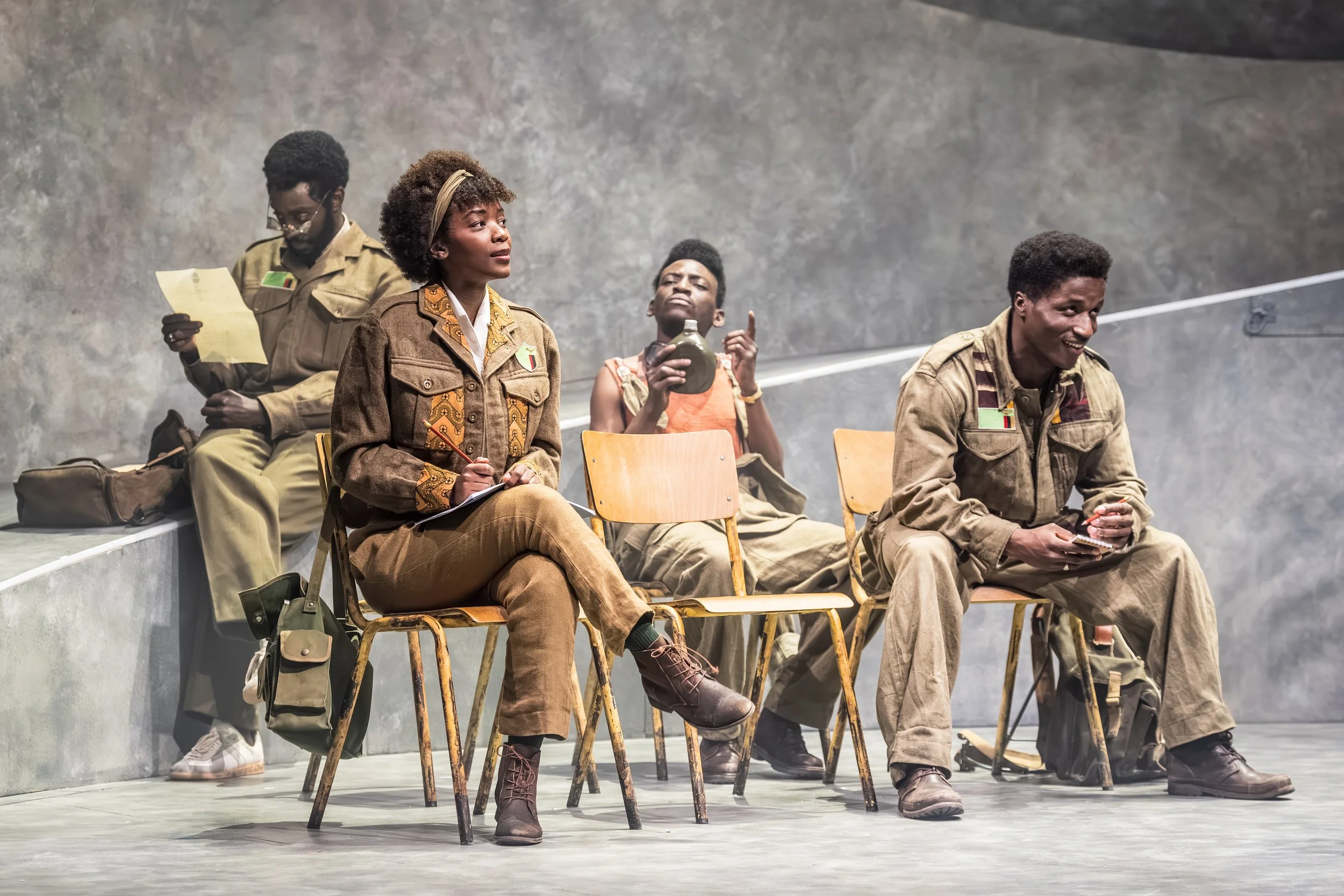
The play starts with a literal bang. A flash of light before pitch-black darkness, and then we are shortly carried into Zambia’s Space Programme. A cyclical, spiral-shaped structure makes up the stage and makes us feel like we are in the interior of a telescope, with a clear sight of the stars that glow above Lusaka. Soutra Gilmour’s set is simple but intricate, and an understated work of beautiful sculpture and design. The Afronauts take the stage, training intensely. Their movements are in a regimented canon, and they work in formation as Lucian Msamati, as their leader Edward Mukaka Nkoloso, watches over them. Their mission remains as yet unknown to us, but the determination is clear; wherever they are headed, they are taking it by storm.
Not long after, we are introduced to the Afronauts themselves, aptly named by Nkoloso as part of his bid to send Africans to the moon before the likes of the Soviet Union and the United States. We meet David (Prince Kundai), the initially chosen Afronaut to bring Nkoloso’s dream to life, who possesses the heart of a soldier and the tongue of a poet, sweet-talking his way into the good books of his teachers and his sweetheart, Matha Mwamba (Ama Qamata). Matha, by contrast, is cautious, studious, serious but equally passionate, and dreams of a world where African girls like herself are allowed to become authors of their own futures. They are rounded out by Munashe Chirisa as the class clown but spirited and devoted Cheelo, and Lukwesa Mwamba as Liji, a sharp-shooting princess, fiercely loyal and unapologetically herself. Aiding Edward in his efforts to train them are their teacher and spiritual guide Grace (Pamela Nomvete) and scientist Simon (Ivanno Jeremiah), whose intelligence far exceeds his social skills, but whose dedication to the cause is inimitable. Together, they form a battalion carved from heart and love for the country. While sometimes opposing in method and execution, Cameron’s script makes clear and certain that their north star remains the same.
The story follows the preparation for their space mission and the obstacles that prove almost insurmountable. Edward’s journey through it unravels the supposed stoicism and rationale of his character. His ability to speak life into his Afronauts at first gives him the air of a visionary marching his troops into battle, making fools of their doubts or fears. He is able to convince Matha that her dreams of inspiring young African women are achievable, and that Simon’s past failures are mere steps to success and a far greater glory. When faced with real challenges that put the lives and livelihoods of the Afronauts in jeopardy, we learn that Edward’s story is one of pure hubris; he is Icarus, catapulting his team to crash-land onto the moon. Edward’s journey from inspiring leader to a subject of his own delusion is portrayed marvellously by Msamati, whose portrayal of the character gives Edward an integrity and humanity that never neatly falls into all good or all evil. He comes head-to-head with his former student Ben (Chomba S. Taulo) and creates a biting scene that unmasks the true madness of Edward’s methods in the light of his own past.
Nomvete’s and Jeremiah’s characters act as two different kinds of foils, with Grace’s spiritual inclination leading her to act intuitively, guiding her students to think with their hearts, while Simon’s logic leads with the mind. The three actors create a powerful trilogy, feeding off each other’s energies and serving as the brains behind the operations. They feel representative of the nation’s past.
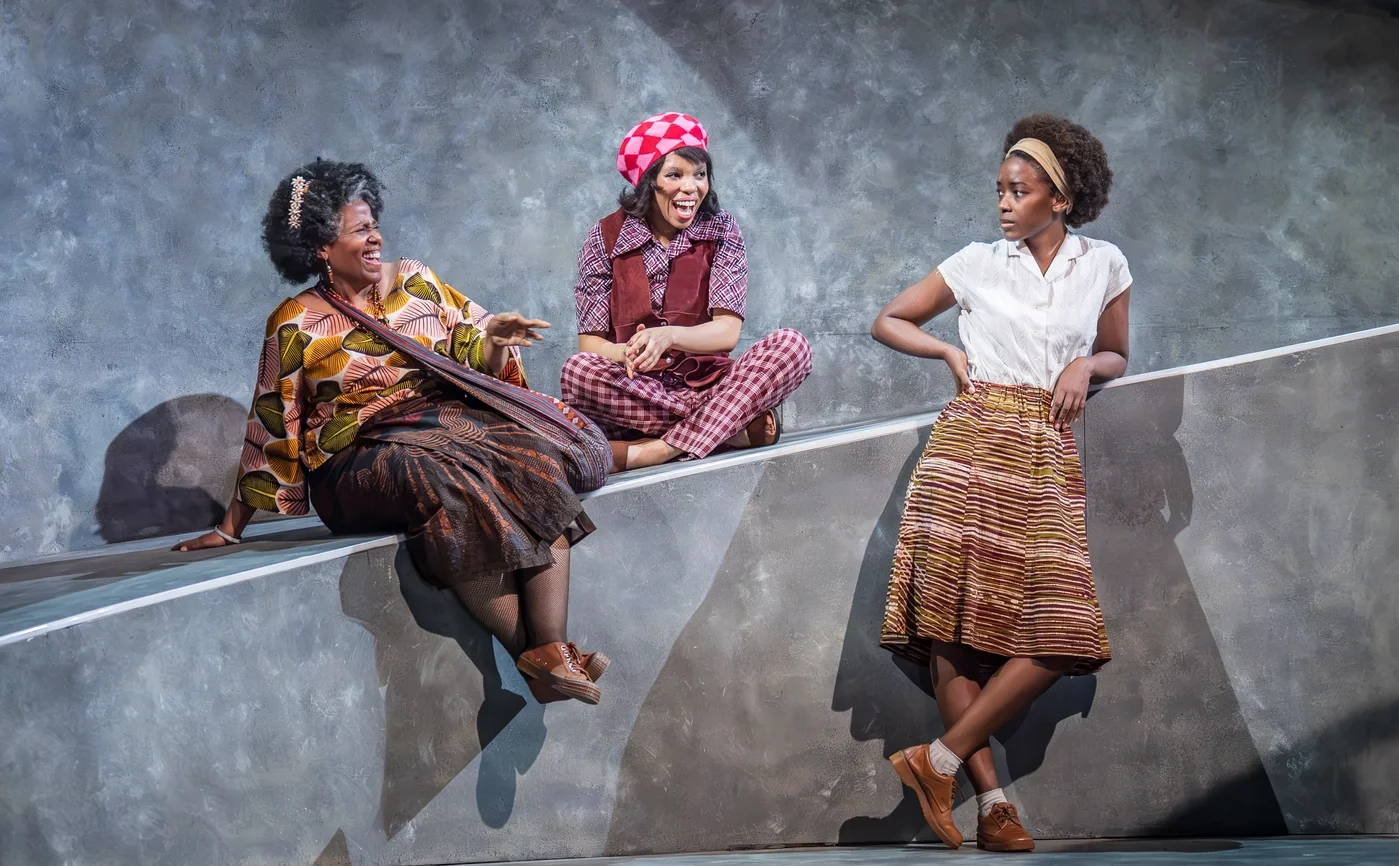
The Afronauts bring youthfulness and zeal, providing the heartbeat of Zambia’s future. Mwamba’s characterisation of Liji turns a character that could easily be portrayed as airheaded and one-dimensional into a relatable young woman who refuses to be reduced to a stereotype. Similarly, Chirisa brings a warmth to Cheelo that makes him more than just comic relief, but a vital part of the team. The relationship between David and Matha is performed with magnetism and charisma by Kundai and Qamata. Their effortless chemistry and palpable tension expose more than just romantic feelings, opening up the play’s themes regarding the progressing position of women in Africa alongside traditional ideas about marriage and gender roles. Qamata’s Matha is headstrong but sensitive, ambitious and determined but still allows herself to feel, and her character development is performed with earnestness. Matha flies, defying the restraints that shackle her, and it feels like the perfect ending to her character’s journey.
The play explores post and anti-colonial sentiment in newly independent Africa, and the emancipation of not just African nations but the African imagination. The Afronauts are subject to ridicule and objection from both their former colonisers as well as their fellow country people. But Edward’s manifesto declares that “first we take the heavens, then we take the stars”; the journey for them is mapped out in their destinies before it reaches earthly planes. Cameron’s ability to write characters and stories that see Black people as their heroes and victors persists in this play, and Touko’s ingenious ability to create worlds that depict this is undeniable in The Afronauts. Khalil Madovi continues his unparalleled run in sound, passing his baton from himself to himself again, to create an Afrofuturistic soundtrack encompassing the sound of a global diaspora across time and place.
The show’s humour and first act take slightly away from its potential emotional impact, as there are scenes that are enjoyable but keep the story slightly stationary for a while. The second act, however, takes everything up exponentially and culminates in a scene that defies the conventions of ordinary theatre. It is not often that we get to see the unconventional dreams of Black people take flight, and the ending of The Afronauts does this literally. Incorporating projected images and excerpts of radio broadcasts that tell the tale of freedom, the play takes the mission of Afrofuturism to its fullest potential.
The Afronauts is a play that will define the future of Black theatre, for its groundbreaking display of what it means to dream, what it looks like to truly aim for the stars and to keep reaching even when you get there. A beautiful display of knowing the power of oneself, and finding strength in the arms of your people, The Afronauts is a transcendent story, altogether inspiring, touching and magical.
By Melody Adebisi
★★★★☆
The Afronauts is showing at Royal Court Theatre until 19 December