Runner Girl by Lara Grace Ilori - ★★★★★
TW: Sexual assault; suicide
There’s a proverb in Yoruba that roughly translates to, “when the ram reverses, it has done so to draw strength”: “àgbò tó tàdí mẹ́yìn”. It points to the idea that a step backwards doesn’t have to mean regression, it can in fact speak to the opposite. A move with intention, drawing on a power — spiritual, personal, ancestral that stands behind you to propel you forwards, even if it doesn’t seem that way. In Lara Grace Ilori’s stunning debut, we see this proverb in action. Spellboundingly poetic, authentic, captivating and powerfully performed Ilori’s one-woman show is a display of humanity in the face of trauma, the dismantling and rebuilding of the mind-body connection, and one girl’s race to come back to herself.
Anu is a runner girl. Having picked up running in uni as a means to connect her mind and body, after graduating it had become a core part of her identity. Like the average Nigerian, this meant that she could not be the “average” runner. If the average running mile time for people her age is 11 minutes, then she would get hers down to 9. From the get go, Ilori’s characterisation of her protagonist, both on script and on the stage is clear, without it being overstated or explained. Anu is bold, tenacious, strong-willed, vivacious, South London to her core. It makes the eventual breakdown of her character later on in the play all the more poignant. One of the key themes in the show is the mind-body connection, and Ilori uses her body to illustrate what Anu’s words evade and skirt around.
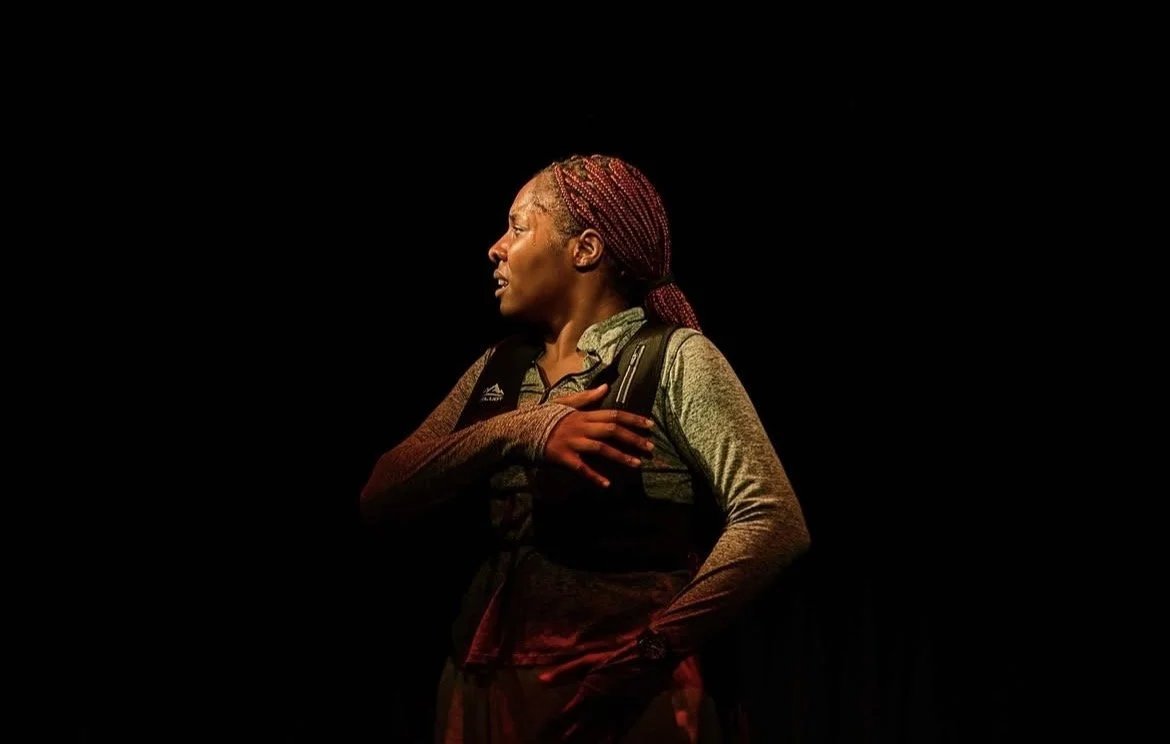
Anu is battling traumas and fears that she refuses to outrightly acknowledge and in doing so hopes that they will become as the air around her, but instead he ends up breathing them back in again. With direction from Ewa Dina, and Associate Director Tia-zakura Camilleri, alongside formidable movement direction from Selina Jones, Ilori works Anu’s body like a machine. Every line is clean, meticulously crafted and executed rhythmically as we watch Anu work herself through her runs. Punctuated by music production also from Ilori and sound design from Francesca Amewudah-Rivers, Anu’s movements become formulaic, as we watch her transform from mere girl, to runner girl. In the moments where she is Anu, a girl who has a deep, lifelong love for her best friend, a tender relationship with her father, an ache for her late mother, her body is less controlled, sometimes more frantic, and the dichotomy between the two identities is stark.
On an evening run, Anu becomes the victim of a sexual assault carried out by a stranger who had been stalking her. The aftermath is the deterioration of Anu’s mental health, and the consequent loss of control over her body. On the surface, it could be easy to say that the plot of the show sees Anu face a traumatic sexual assault that affect her mental health, and causes her to lose control of the body she has worked so hard to master, but I don’t feel this suffices. Anu’s story begins long before she takes up running, and starts with the life of her late mother, a native Nigerian who struggles to acclimatise to a life in the isolating hustle and bustle of London with an infant child and working husband. The parallels drawn between the life of Anu and that of her mother is a bittersweet inter-generational story of love and perseverance. Anu’s mother’s plight is depicted through a voiceover, performed in Yoruba by Ilori’s own mother, with English translations projected onto the back of the stage, enveloping us in the story of her life.
Ilori’s script evokes similar ideas to Chinua Achebe’s Things Fall Apart, in addressing topics that feel taboo in many African communities, such as suicide, as well as the failings of British institutions towards the people from their former colonies from a post-colonial lens. Ilori does this with care, delicately unraveling the generational wounds and tending to them with empathy.
Overall, Runner Girl evokes the same feelings to it that Michaela Coel’s Chewing Gum Dreams and Phoebe Waller Bridge’s Fleabag do. A truly captivating telling of a story centring the life of a woman in her own right, and the world she inhabits. Ilori’s talent, hard work and craft shines in every part of the play, and it was a privilege to witness.
★★★★★
Melody Adebisi