Fences by August Wilson – ★★★★★
The world that August Wilson was born into was coloured black and white. Strict racial binaries imposed by his country’s disgraceful history meant that the narratives that Wilson’s generation were fed served the sole purpose of keeping their world black and white, with little room for self-determination, imagination or expansion. When Wilson set out to write his two-time Pulitzer prize winning and 72 time Tony Award nominated Pittsburgh Cycle - a collection of ten plays, each set in a different decade and all but one set in Pittsburgh, Pennsylvania - his goal was a simple, but game changing one. He did not want to write about “historical events or the pathologies of the black community” but instead sought to “present the unique particulars of black American culture as the transformation of impulse and sensibility into codes of conduct and response, into cultural rituals that defined and celebrated ourselves as men and women of high purpose”. He places Black people at the centre of human stories, ones where characters contain multitudes, stories are nuanced and life presents as it does in the real world; a complex mix of joy and tragedy. No play does this better than Fences. In Daniel Bailey’s visceral, masterpiece rendition of Wilson’s classic play, we get a story that feels both human and surreal; grounded and mystical.
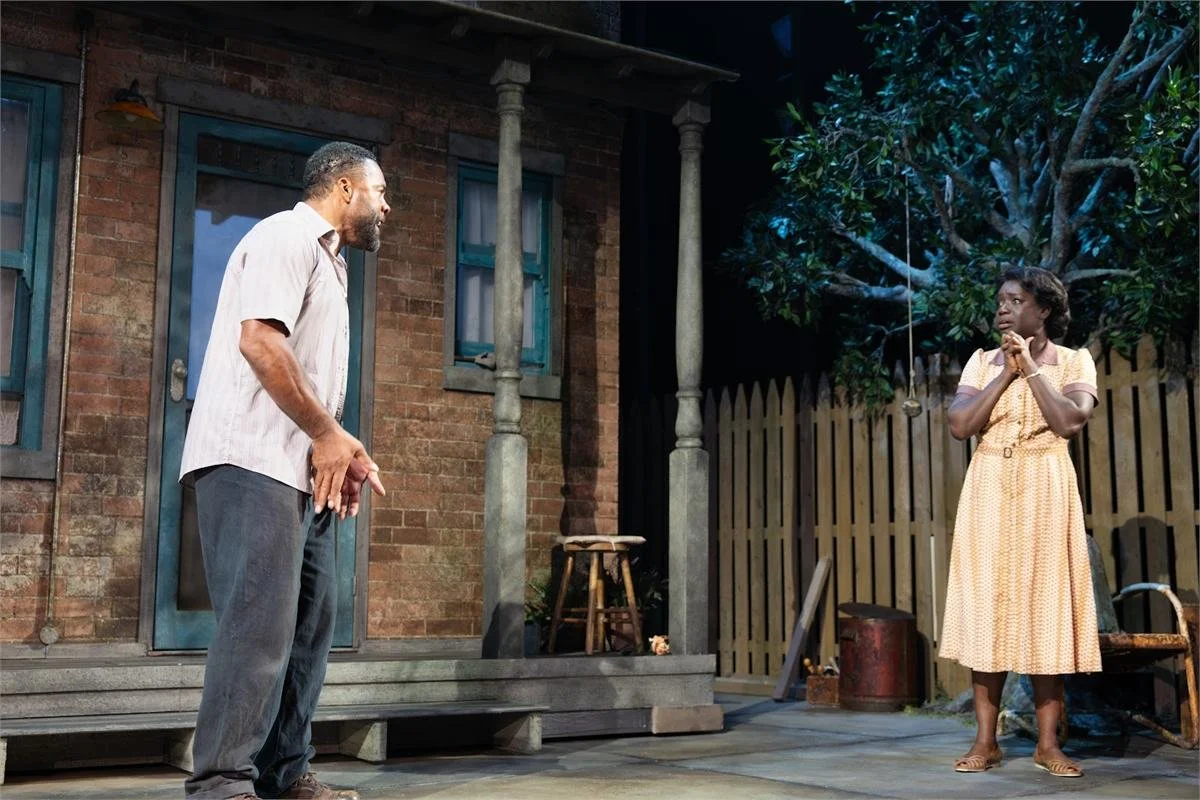
Before a word is spoken, before any of the characters take the stage, Lily Arnold’s set opens the story. The Maxson house feels as though it is its own living and breathing entity that has survived a lifetime of secrets, memories and emotional storms. Such is the detail of Arnold’s set. It is not long before we meet Fences’ protagonist Troy Maxson played by Ray Fearon whose take on the character is so arresting you almost struggle to remember this is a role that was not personally written for him; Fearon becomes Troy. A former baseball player turned trash collector whose potential stardom was derailed by a stint in jail for a murder he committed while attempting to rob a man. Hard headed, charismatic, inflexible and emotionally conflicted, Troy is a man at war with himself, and Fearon brings this to the forefront. The story explores the ways that one man’s battle against his own reflection, and societal structures that seem to beset him has a domino effect on the world around him. Troy navigates relationships with his loved ones, while trying to reconcile reality with his own damaged perception of self.
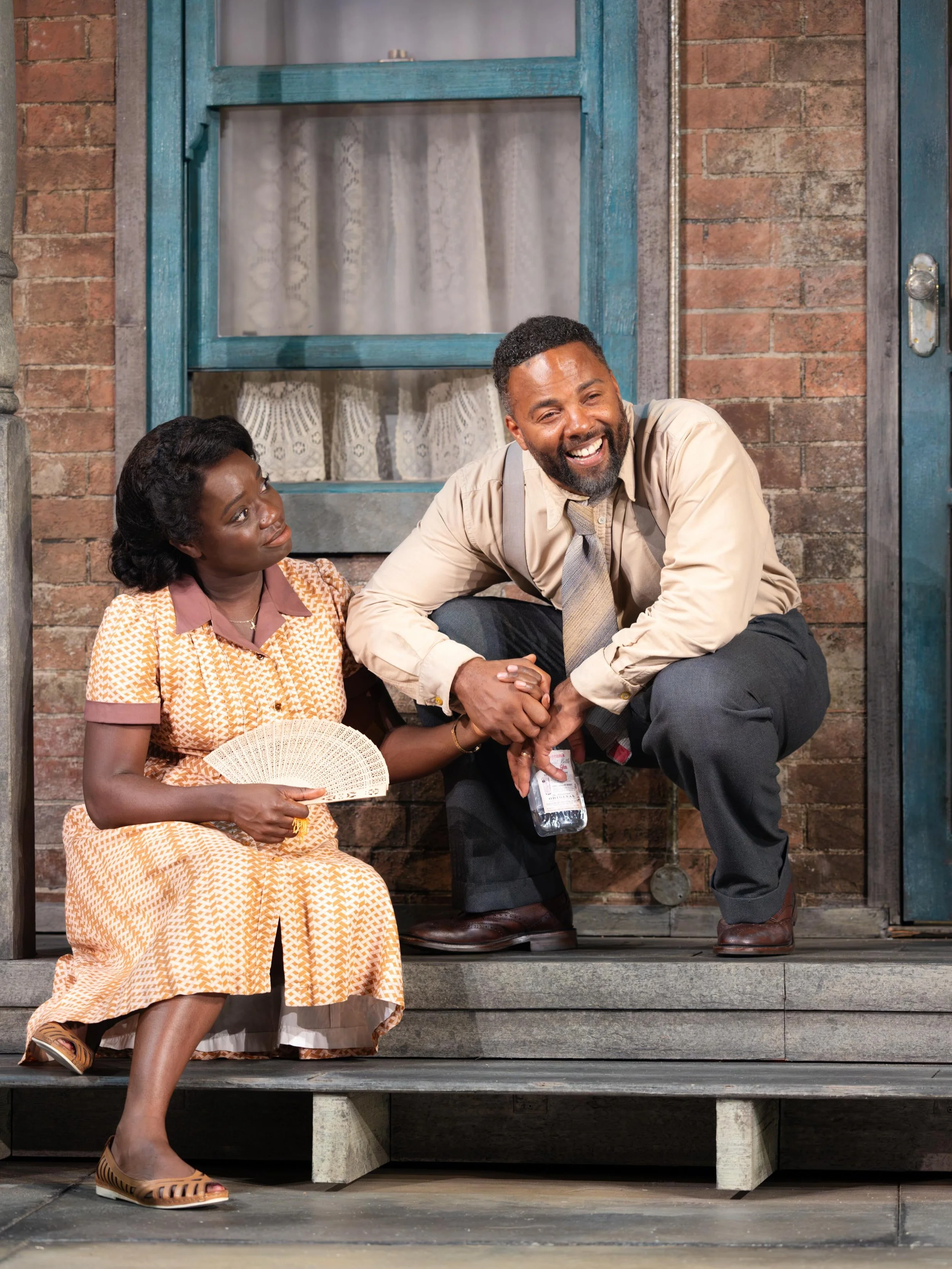
Wilson’s work often tackled the idea of the individual, and their worth and Troy battles with finding a sense of self-worth, or maybe even a sense of self, in a life that he feels is out of his control. Fearon channels Troy’s internal turmoil masterfully, making him a character that we both judge and empathise with. This standard set by Fearon, this ability to weld himself into the setting, the character and the story is matched by the rest of the cast. Madeline Appiah as Rose, Troy’s wife and the only woman character present on stage for most of the show is undeniable. Rose is loyal to Troy because she is loyal to her own commitments but struggles to understand his self-destruction. Appiah tears her heart from her chest to give us a performance so raw it reaches into your own and inhabits a space there. The journey Josh Tedeku takes as their son Corey , a budding football player whose hopes at a professional career is scattered by his father, shows the full range of the actor's ability, from a teenage boy, eager to understand the world through the eyes of his father, to the young man who finally does and comes to terms with the harsh realities of what he sees. The formation of his character is thoughtful, intentional and immensely powerful. Michael Ahomka-Lindsay as Troy’s first son Lyons brings an effortless charm, an earnest desire to please and disarm, nursing a deeper need for acceptance, while Everal A Walsh as Troy’s life-long best friend delivers a steady hand in their partnership, and a heartbreaking but delicate severance of their friendship. A truly haunting and puncturing performance comes from Simon-Anthony Rhoden as Gabe, Troy’s veteran brother whose war injuries have caused irreparable psychological damage, and whose presence oscillates between his world and a heavenly one. The cast is rounded out by Raynell, played by Pelo Thithi in the production I saw, a true star in the making whose unwavering confidence as Troy’s daughter from an extra-marital affair is phenomenal.
The cast brings Wilson’s vision to life in extraordinary ways, but the direction and creative crew behind the show make it transcendent. Jai Morjaria’s lighting design fires the stage an incandescent glow, setting the sun and ushering in nights of deep navy hues to display the transition of time, but also of control, intensity and turning points in the story. There’s a moment where the set turns on the revolving stage, revealing a Ahomka-Lindsay and Rhoden on separate floors of the house wielding the saxophone and trumpet respectively, and Arnold and Mojaria’s set and light collide with Khalil Madovi’s sound design, creating a moment that renders us speechless. Madovi, throughout the show incorporates the live musical stylings of Ahomka-Lindsay and Rhoden with his own tracks, peppered with recorded vocals and classic music from a time past. The effect overall creates a setting that is both historical and somewhat supernatural.
Daniel Bailey’s direction speaks to creativity, inspiration and intention. His version of the classic play does not war against the 2016 film adaptation, or try defiantly to set itself apart from other plays of a similar nature. Instead, it is a seamless melange of his own brilliant artistic vision, and the essence of the play that carries through every interaction. There are remnants of the film adaptation, and it carries the same weight as its original source but it is also fresh and relevant, exciting.
Wilson’s work has persisted over time as a beacon of self-determination, the beautiful complexities of expression and matters of the heart and Fences is a play that encompasses all of these things. This production at the Lyric Hammersmith is nothing short of remarkable. In the hands of Bailey, and the exceptional cast and creatives, this is a contender for play of the year.
Fences will be showing at the Lyric Hammersmith until 31 October
By Melody Adebisi
★★★★★