Boxes by Shona Bukola Babayemi – ★★★☆☆
Nothing compares to immersing yourself in all that London has to offer quite like heading to Soho Theatre to catch a studio show on a rainy February evening. Soho Theatre is everything you’d expect from a theatre tucked away just off Oxford Street. There’s a lively bar on the ground floor, with loved ones embracing and catching up beneath the wash of a pink neon sign, and before you know it, it’s time to head up several flights of stairs before Boxes begins.
As I enter the space, I snag a first-row seat and, to my surprise, the only thing on stage is a pile of cardboard boxes. There is a giant cardboard box centre stage, with a few smaller ones behind it. Projected images on the curtains give a 90s/00s flavour, full of nostalgia, replicating the sort of animations reminiscent of the never-forgotten Tracy Beaker and Groovy Chick. A well-thought-out selection of songs focusing on UK Garage plays before the show starts and continues during the performance. It’s a vivid throwback to flicking through the up-and-coming artists beaming from our television screens on Channel U, and all of this sets a tone for what I thought would merely be a nostalgic piece of theatre where I’d eagerly reminisce about my teenage years.
Boxes, written and performed by Shona Bukola Babayemi, takes something as simple as a cardboard cube and thinks outside the box to shape her autobiographical story, tracing the transient journey from childhood to adulthood across continents, and from being housed to navigating homelessness. The props and costumes are all shades of papery browns and beiges, reflecting the rawness, and at times the bleakness, of her unfolding life as she moves from place to place.
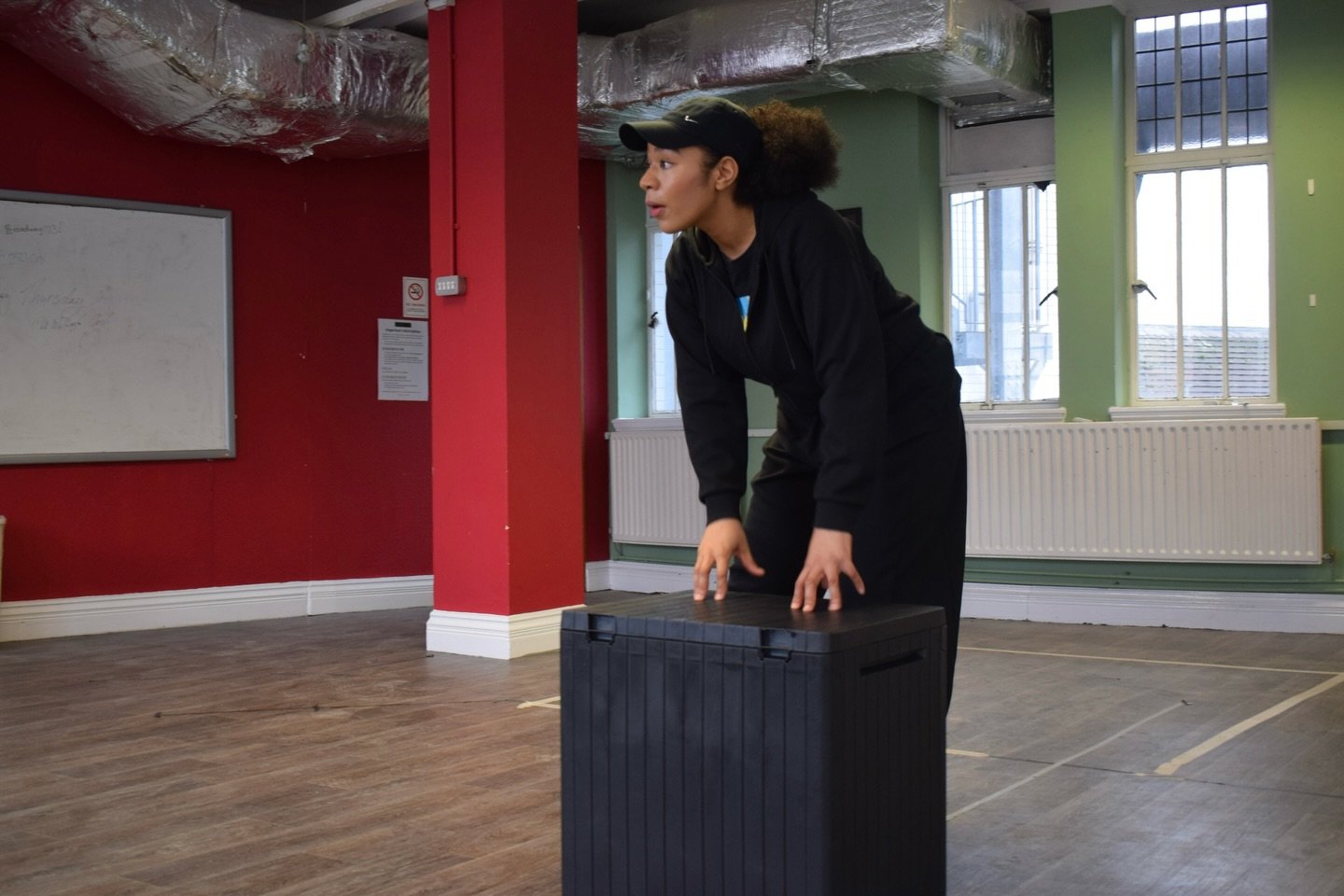
The performance begins with Babayemi unwrapping her presents as a child, while she sharply and comically unravels her thoughts about each distinct gift: a bike, a Barbie, and a journal. This sets the tone for much of the play, where she has flash-backs and recounts memories from this period of her life, being at school in the UK, having a brief stint in the USA, making friends, watching her classmates enter their first relationships, attending parties where the best Garage tracks play all night, and so on.
Nostalgia and uncertainty seem to be the fabrics that weave the play together, as the audience are thrown into dreamlike movement sequences after moments of violence or feelings of being out of place and forgotten. The title of the play Boxes is extremely fitting and serves as a reminder that boxes are objects used in all key stages of life, from moving house and wrapping gifts to storing secrets. They are also a symbol of homelessness, which forms the thread running through the first to second half of the play.
This is the section of the play that dives headfirst into the harsh reality of how helpless it can feel in the UK, where you can wake up one day to realise you have been locked out of your home and, in an instant, become unhoused. The second act is filled with accidental engagements with narcotics, stressful phone calls, brushes with the past, fears about the uncertainty of the future, and finding solace in places like the library to let time pass while observing other individuals eating their custard creams and crying into the pages of their favourite novels. Babayemi meets and briefly reconnects with many people during her struggle to find permanent housing. It is a story of a thousand tales of passing faces. She encounters brash personalities as well as kind and caring souls, but no one seems to be a constant in her world, not even her old self, as she looks in the mirror one day and utters, ‘It’s unmistakenly not me.’
In conclusion, Boxes stands as a powerful example of what small-scale studio theatre can do best, inviting us into an intimate, fragile world and asking us to sit with stories that are far too often pushed to the margins. The stamina and emotional precision required to sustain a one-woman performance is impressive. The decision to centre a solitary figure on stage sharpens the sense of isolation, underscoring both the instability of circumstance and the lack of meaningful support. While some of the more surreal sequences blur the emotional focus, and the pacing in the later sections struggles to maintain momentum, the production remains a timely reminder and wake-up call that many of us are closer to being unhoused than to owning property, particularly in the context of rising unemployability and soaring house prices. Boxes is an engaging, important, and at times comic piece, but one that, despite its tenderness and political urgency, never quite reaches the level of being truly soul-shattering in an unforgettable way.
★★★☆☆
By Nadia Mantock