One Flew Over the Cuckoo’s Nest – ★★★★★
Theatre is, and always has been, inherently political. At its core, its intention is to provoke critical thought as much as it is to entertain, to unite and to both suspend and inspire belief. To create its own rules for storytelling, which sometimes means redefining genre and culture, and making audiences entrust their minds and hearts into the hands of its creators.
A lot of plays do a lot of these things. Clint Dyer's take on Dale Wasserman's adaptation of One Flew Over the Cuckoo's Nest does all of this, and it does a lot more. Taking Ken Kesey's era-defining masterpiece, and reimagining it through a black, postcolonial lens, Dyer, the cast and creatives of this production of the Old Vic remind us of what theatre can be, and should be.
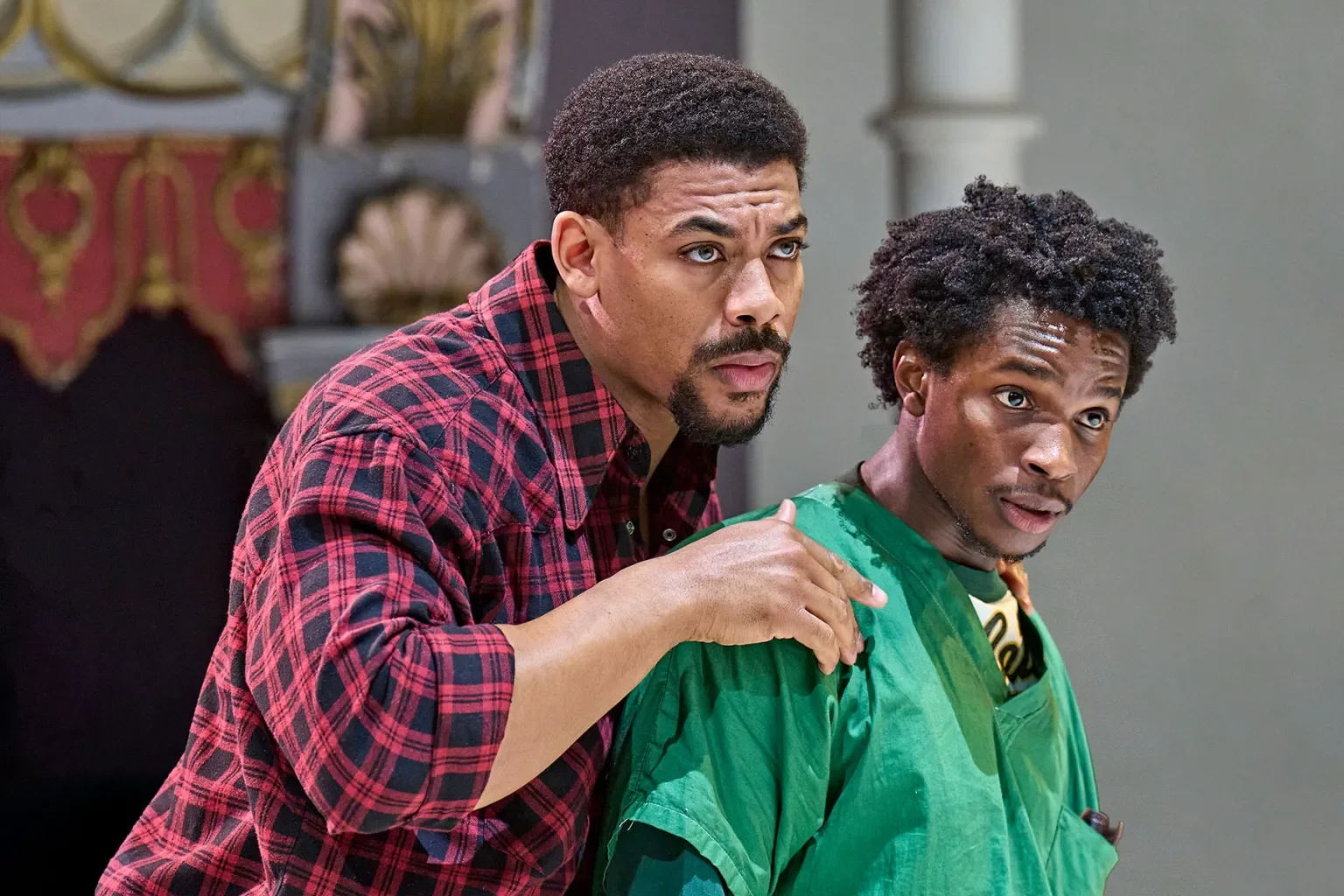
Set in a psychiatric unit for men, One Flew Over the Cuckoo's Nest follows the events that take place after the arrival of one Randle P McMurphy, a loose cannon, admitted to the unit by faking "insanity" to avoid a prison sentence. His arrival is a catalyst for his fellow patients, who take to his charm and leadership almost immediately, and join his battalion as he declares war on the dictator-like head Nurse, Nurse Ratched. Ken Kesey's classic novel was written in the midst of, and subsequently influenced by, the Civil Rights Movement, which brought with it institutional changes to the way that psychiatry was approached in the US. The decision then to make One Flew Over the Cuckoo's Nest at the Old Vic Theatre with a majority all-black cast has many implications. It is a departure from the infamous film, but it carries with it some of the spirit and unspoken truth from the original novel.
Dyer's production is set in New Orleans, with the opening scene paying homage to the Black Masking Indians of Congo Square in a dreamlike sequence. Performed in a round, the two-tiered set designed by Ben Stones feels claustrophobic, the sterile white stairs, checkered green floors creating an environment that feels clinical and turns the characters into chess pieces, exchanging moves for power. Forcing the cast into a relatively cramped space we know from the onset that we're not just audience members, we are spectators of lab rats in a tank, with visibility of every angle, not even the most discreet of details goes unseen. We meet the aides and nurses first, who serve as security guards, dressed in all white to match the wing that sits on top of the stairs from which they watch the patients. The patients – that I was tempted just now to refer to as inmates which feels like a fitting synonym – in contrast camouflage with the floors dressed in green scrubs. The first scene on the ward sets the standard for the faultless performances we are about to witness. Between physicality, and chemistry, each of the actors gives us a small taste of who each character is. They create a static state, the calm before the storm that is about to ensue.
When Aaron Pierre enters the stage as McMurphy, he changes the atmosphere of the ward and the Old Vic. His McMurphy is frantic and unsettled, a foil to his imposing stature. Pierre commandeers the stage, as does McMurphy with the ward, and his ability to portray a character of such complexity is nothing short of remarkable. The inflections in his speech, and the erratic movement of his body transform him into a walking spectacle, who moves first and thinks rarely. He is a charismatic cult leader, with the energy of a Baptist preacher. His portrayal of McMurphy, an anti-hero of questionable morality, for me is reminiscent of Jez Butterworth's protagonist Johnny "Rooster" Byron in his highly acclaimed play, Jerusalem. The bringer of chaos, packaged in a charming, confident and chaotic leader, the men look at him like he is a hero.
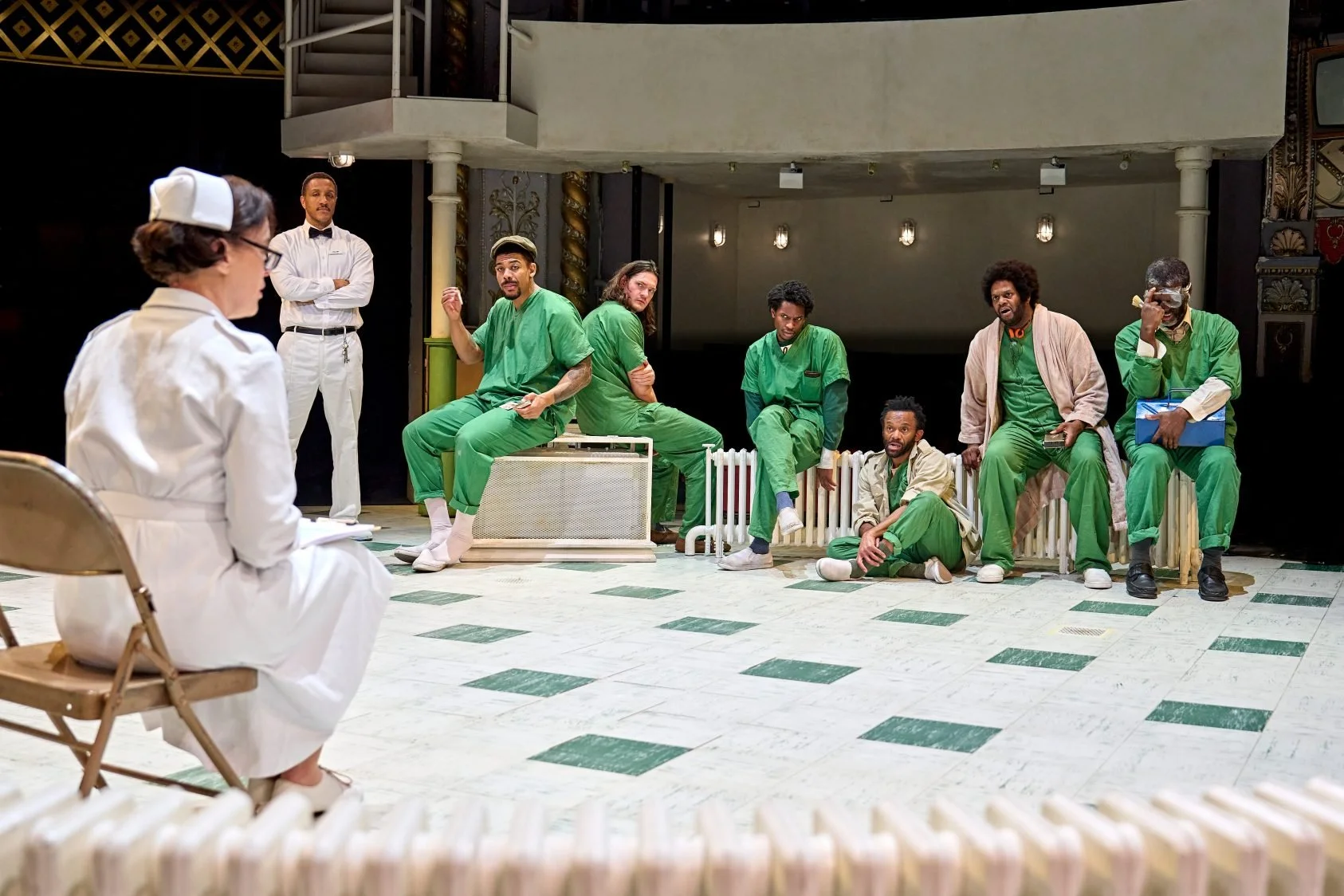
McMurphy steps into this role, becoming who each of the men wants him to be. But is he their saviour, or just the Lord of Misrule? If they find a messiah in a man like them, is he still their messiah or is he now just a man, like them?
Pierre leads a cast that all deliver outstandingly. Giles Terrera is undoubtedly a force in the world of UK theatre, and he sustains his reputation in this show. Pedantic and particular as Dale Harding, his temperament is almost the exact opposite of McMurphy's, but it has its own strength; it is quieter and more stable. He sings a harrowing melody at the end of the play, his voice taking us out of the lucid world of the ward and back into ourselves. He is phenomenal. Olivia Williams is menacing and sinister as Nurse Ratched, whose character feels symbolic of the "white gaze" and its obsession with subjugating black bodies and sexuality, especially. Kedar Williams-Stirling delivers a sincere and heart-wrenching portrayal of Bobby Bibbit, earnest and layered, his interactions with Williams being a particular highlight. Javone Prince, Mo Sesay and Jason Pennycooke all hold their own as followers of McMurphy's religion, and pawns in a game of power and control between McMurphy and Nurse Ratched. A special commendation must go to Ene Frost, whose commitment to his character Ruckely, who is in an agitated but catatonic state throughout, is impressive. All the supporting cast manage to make us laugh while telling a story that is unsettling and controversial for a number of reasons, and this is the power of a perfectly cast show.
The play's genius lies in its ability to interpolate themes of power, postcolonial history and black masculinity without interrupting the flow of the action or changing the original plot. Dyer's interpretation does not subvert Kesey's story; it synthesises with it, creating a production that is fresh and provocative. In the play, the gambling, drinking and penchant for sport are no longer just freedoms that Nurse Ratched dangles in front of the patients. They take on a slightly different hue when you consider stereotypes pitted against black men in America. Nurse Ratched's drip feeding information from the patients' loved ones to the patients isn't just her being conniving. The play's women are either prostitutes or nurses, all of them white, which is speaking to something bigger and darker.
You have to look at everything slightly differently; you have to squint through critical eyes.
This is perhaps most pertinent in Arthur Boan's powerful portrayal of Chief Bromden, a native American patient who feigns deafness and muteness until McMurphy's arrival. The culture of Black Masking Indians in New Orleans is a heavy one and deeply embedded in Chief Bromden's character. There is a long-standing history between African Americans and Native Americans in New Orleans, and so the relationship between McMurphy and Chief Bromden is more than just real recognising real, it's a recognition of struggle, pain and fight for freedom and Bromden's selective silence is more than just an attempt to stay out of the chaos of the ward, it's all symbolic.
There is a lot to say about One Flew Over the Cuckoo's Nest, too much for one person to fully understand in a single watch. Intricate, daring, deeply artistic, dark and all-consuming, this is a show that needs all of your attention. From light design by Chris Davey, movement direction by Lucie Pankhurst and all the creative choices in between, every aspect feels intentional and impactful. This is a show that reminds you of what theatre is about.
★★★★★
One Flew Over the Cuckoo’s Nest is showing at The Old Vic until 23 May.