Capping by Maddy Olaoye – ★★★☆☆
capping (verb)
Originating from African American Vernacular English (AAVE), “capping” is used to indicate when someone is exaggerating, faking, or lying
Adolescence is a wild ride, and the depths of that chaotic time in someone’s life have been documented across film, TV, literature and theatre for centuries now. From Shakespeare’s Romeo & Juliet to Netflix’s On My Block, depictions of teenagehood showcase difficult relationships, the struggle to find one’s identity, crashouts of the highest proportion, but also a deep sense of joy. One that lingers from the innocence of childhood and hasn’t yet been tainted by the realities of childhood. Maddy Olaoye’s Capping is an authentic and well-crafted blend of the full spectrum of adolescence. Following the coming-of-age of four South London teens, CAPPING shines a spotlight on the inner workings of the minds of Gen-Alpha.
In a Q&A after the shows, we learn that Olaoye has vast experience in the teaching profession. This is not a surprise. The authenticity she is able to achieve with her characters makes them feel like they are as real to me as the friends of my teenage siblings, or people whose conversations I’ve caught the tail end of on TFL. Jayden (KJ Phillip), Zaine (Fawas Arowojobe), Tola (Lucia Aigbe) and Olivia (Aisha Jalloh) are a group of friends, all on the cusp of adulthood. They’re all facing unique challenges, their lives all inevitably dictated by different upbringings and circumstances, but they are doing life together.
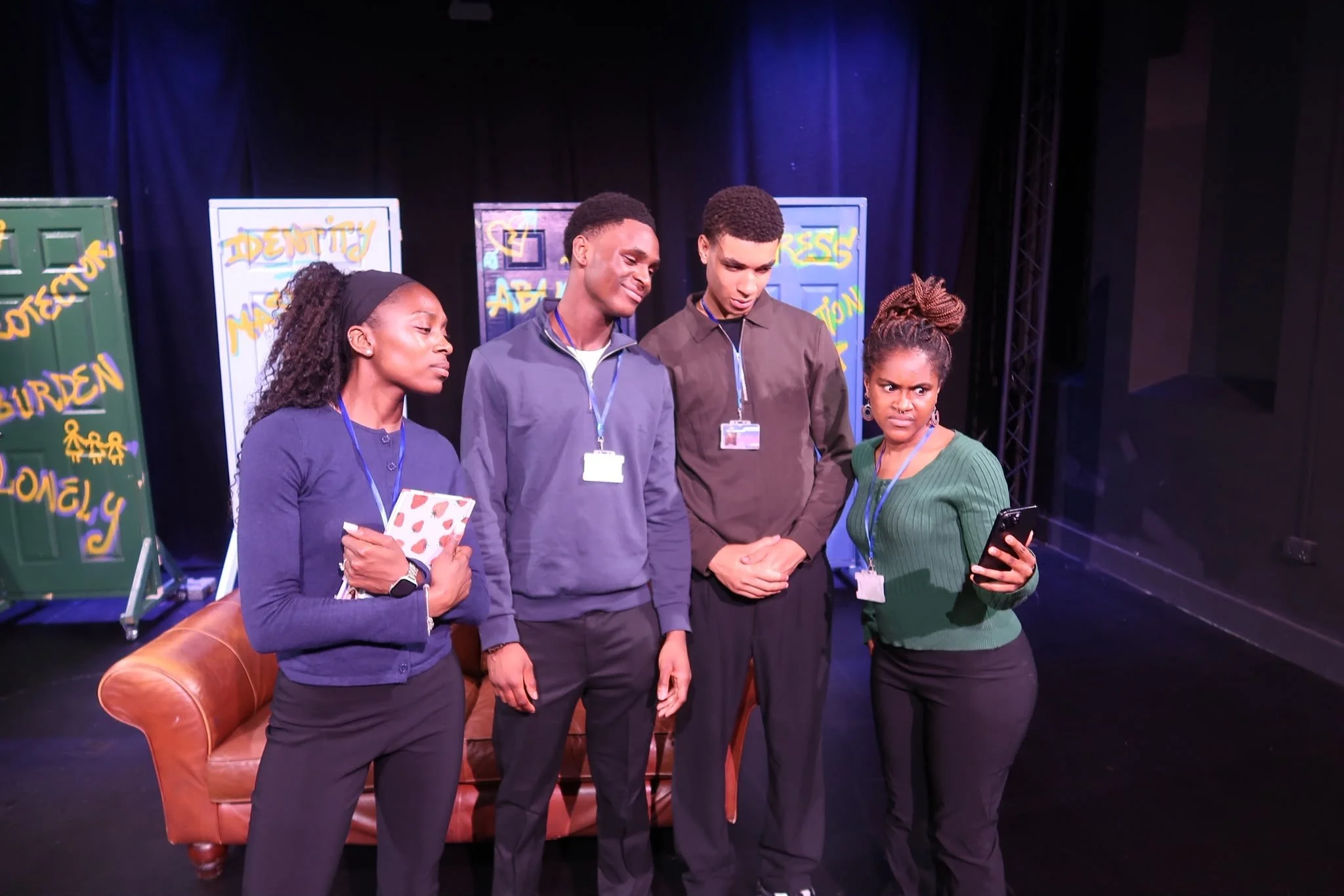
The set consists of four separate doors, and on them are painted the outward struggles each one of them faces internally, and the foursome are confined to the realities of what lies behind those closed doors. Jayden, who is mixed-race and raised in Oxford, is trying to forge a new identity for himself, creating distance between the blackness he feels he is finding in his South London sixth form, and the otherness he felt at boarding school. Zaine falls victim to the predatory advances of his father’s girlfriend and feels silenced by the loneliness and guilt he feels. Tola feels silenced for different reasons, as she has her voice and desires to pursue a career in photography drowned out by the demands of her father, while Olivia buckles under the neglect of her mother, as she is forced into a parentified role, having to mother herself and her younger siblings. None of them quite know how to deal with the problems they’re facing, and so they are all putting on a front; to put it simply, they are all “capping” about one thing or another.
The cast give everything to their performances, committing whole heartedly to their roles, filling the stage with infectious energy. The world built around them combined with the strength of each performance makes this world feel inviting and warm. Most The show is so quintessentially South London, with a sound so distinct it announces itself and stories that ring true and relatable. The movement direction is simply phenomenal, and Olaoye brings out the best of each character, allowing them to move in harmonious tandem with each other, and still hold their own individually.
The development of Zaine and Olivia’s characters in particular are intricate and executed beautifully. Arowojobe brings gravity and poignancy to a character battling a grievance that he does not have the words to articulate, while Jalloh delivers multiple monologues with potent intensity, highlighting the absence of her mother in her life as she bears her heart out to the four walls that house her and her fears.The show does not shy away from tackling issues that tend to be swept under the rug, particularly within black communities, and this is achieved while still maintaining the jovial nature of the characters.
While the play is highly entertaining and gives valuable insight into the pressures facing teens, there is the feeling that the target audience for the show is teenagers themselves. The issues they face are indeed complex, but the approach to telling the story feels less so. There are storylines that felt slightly underdeveloped, or cliched, again compelling to a younger audience hearing these problems voiced for the first time, but not offering something groundbreaking perhaps to a maturer audience. Capping is still an important play, but one that feels like it belongs to a particular time and age bracket.
The triumph of the show is the bonds created by the cast through their characters. Another key element of adolescence is the strength and fortifying power of relationships, and this endures in every scene of the show. Olaoye’s writing and direction hits home for the teenage heart that persists in all of us, relatable and inspiring.
★★★☆☆
By Melody Adebisi